Words & Photography: Caroline Prescott // Additional Photography: Immerse India
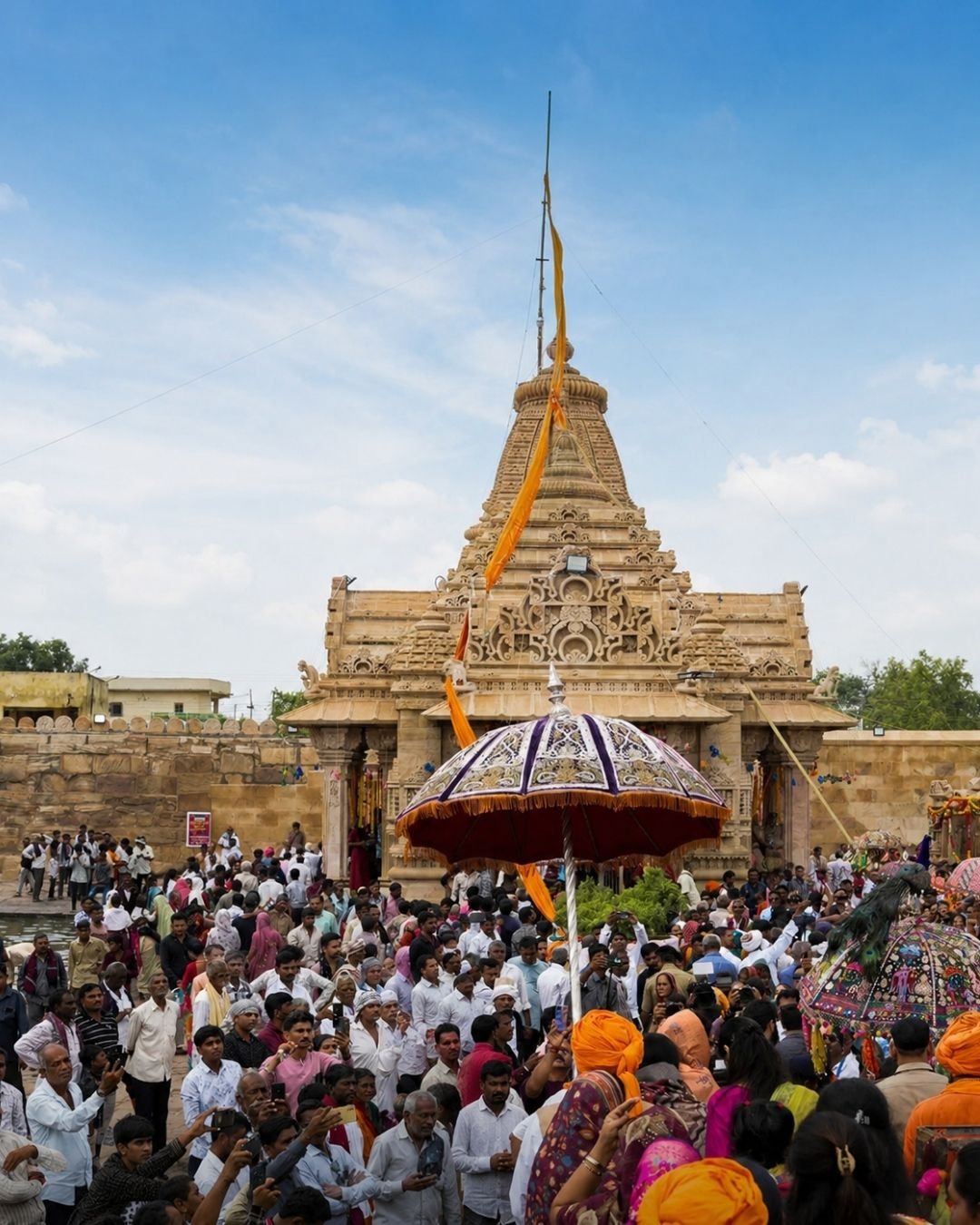
Say Tarnetar slowly, you can almost hear the older word inside it. Trinetreshwar, the lord of the three eyes, is a name of Shiva, who in the Hindu faith carries a sacred eye at the centre of his forehead alongside the usual two. The local gala takes place on the grounds of the Trinetreshwar Mahadev temple, a Shiva temple whose present building was rebuilt in the nineteenth century on the site of a much older shrine.
Beside it sits a sacred tank that pilgrims call the destroyer of sins. Local belief holds that the River Ganga once ran across this plain, so a dip in the tank is counted as worth as much as bathing in the Ganges itself, several hundred miles to the north. People bathe here first, then head to the temple, and only then go looking for a spouse. And this order matters.
The fair traces back to the Mahabharata, one of the great Sanskrit texts of Hindu tradition and a wellspring for an enormous amount of Indian art, theatre and thought. In it, the princess Draupadi holds a swayamvar, an old custom in which a woman of rank chose her own husband from a field of assembled suitors rather than having one picked for her. The test she set was close to impossible. A fish was fixed spinning at the top of a tall pole, and a suitor had to put a single arrow through its eye while aiming not at the fish but at its image in the water below.
Arjuna, the finest archer among the five Pandava brothers, made the shot, and Draupadi chose him and placed the garland of marriage around his neck. The country around Tarnetar is held to be Panchal, Draupadi’s own homeland, and the people here have carried the tradition on ever since. All of which can sound like distant history until you watch it play out in front of you.
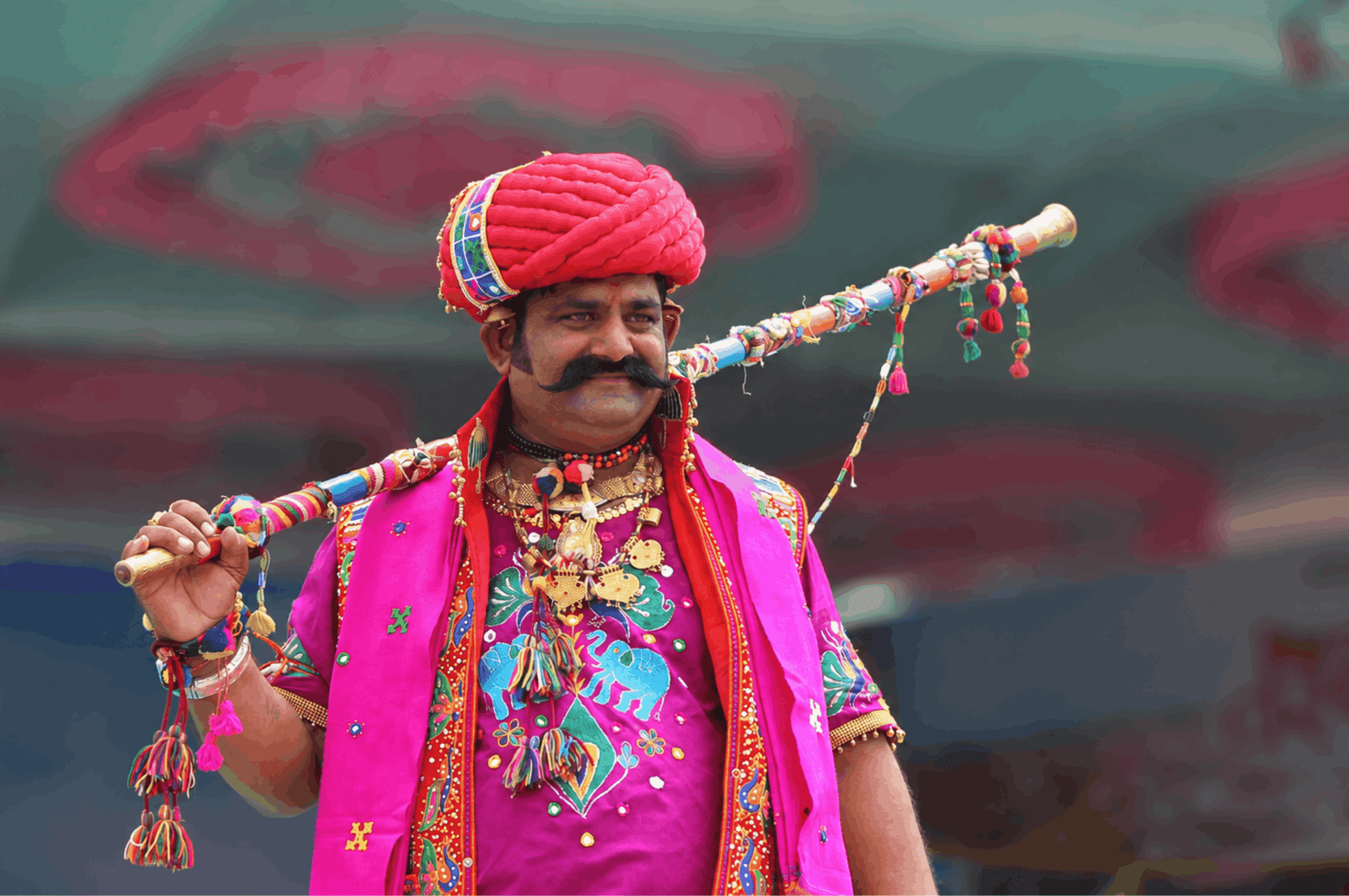
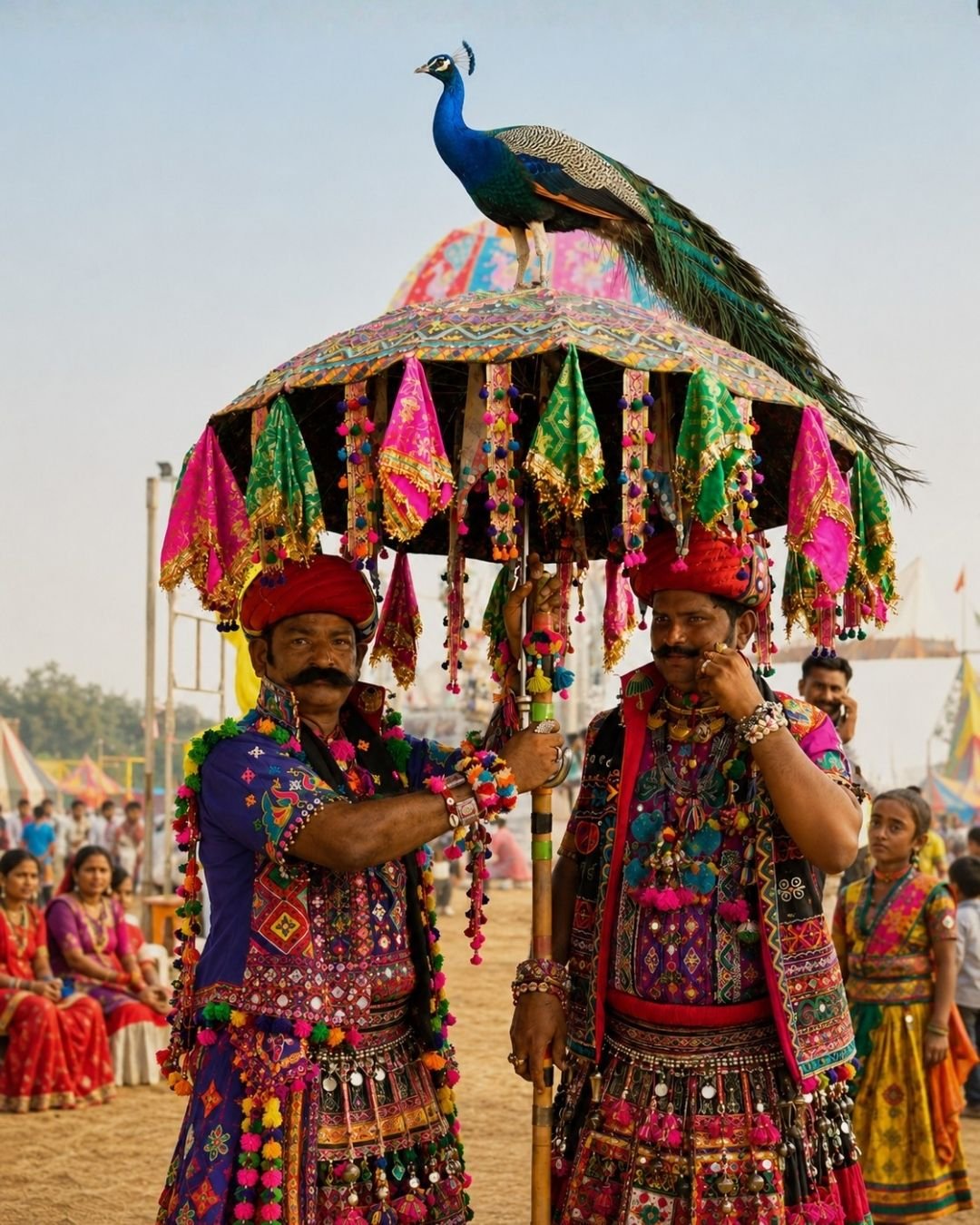
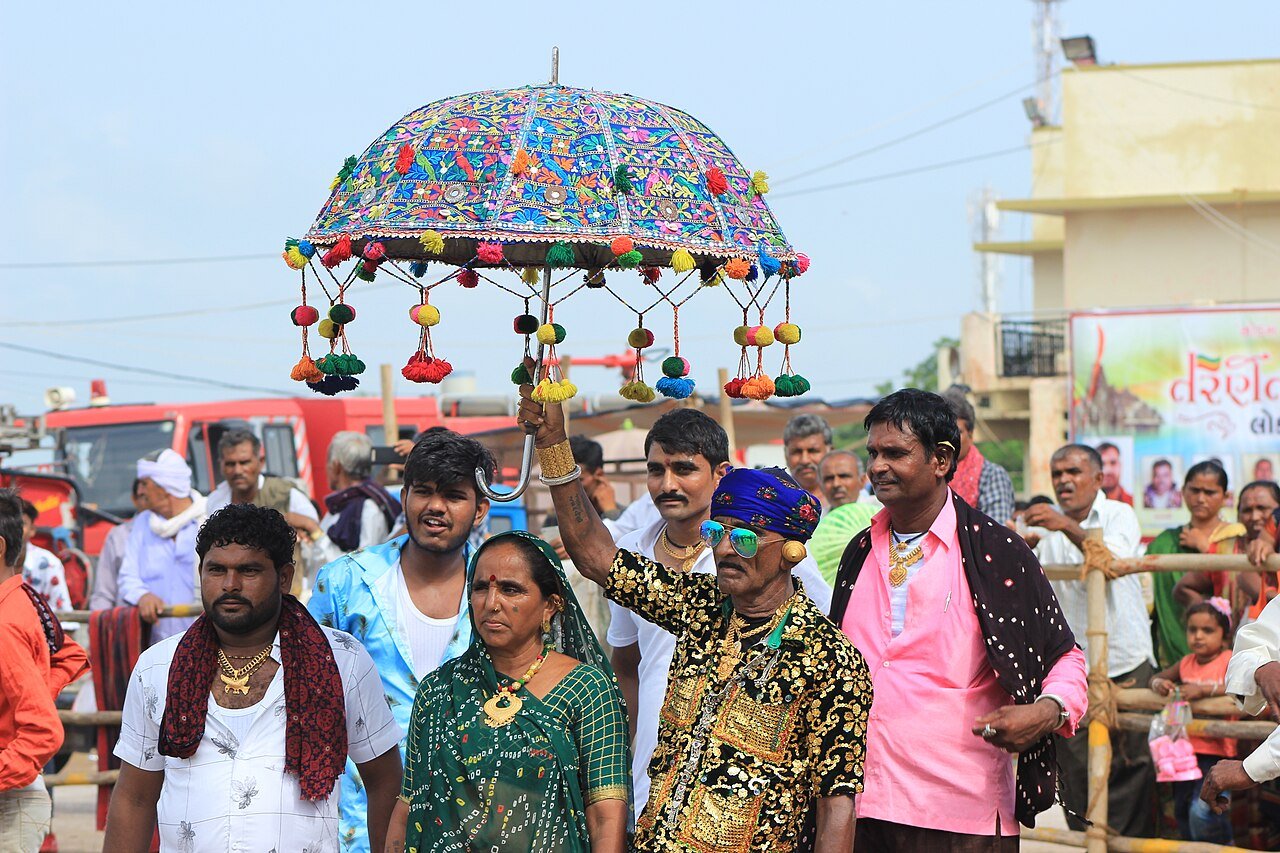
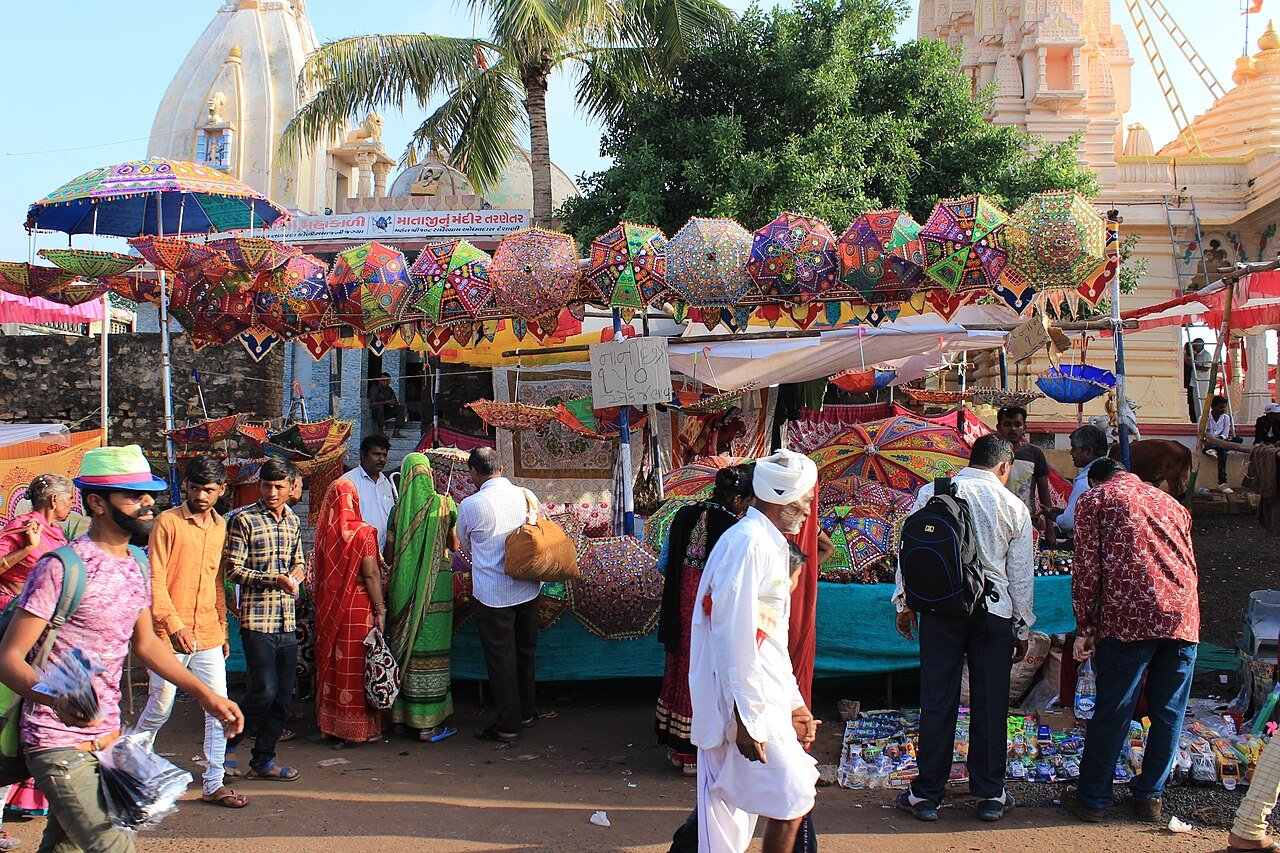
This is where the Tarnetar fair stops being a story and turns into a slightly tense social occasion. Young men from the herding and farming communities of Saurashtra, the Koli, Bharwad and Rabari among them, arrive to be looked over and, with luck, chosen. Their main instrument of persuasion is the umbrella. A Tarnetar umbrella is not something a man buys. He embroiders his own across the better part of a year, building up mirror work, beadwork and patchwork from the rim to the crown and fringing the edge with little handkerchiefs, the finished thing a portable CV in thread. The work is the proposition, and it begins long before the festival itself.
The women, importantly, do the choosing, and they signal in colour. Rabari women dance a slow circular folk dance, and the skirt colour carries the message. Black means married and settled. Red means unmarried and watching. Custom holds that if a young woman steps away from the circle to talk with one of the umbrella bearers, the question has effectively been answered.
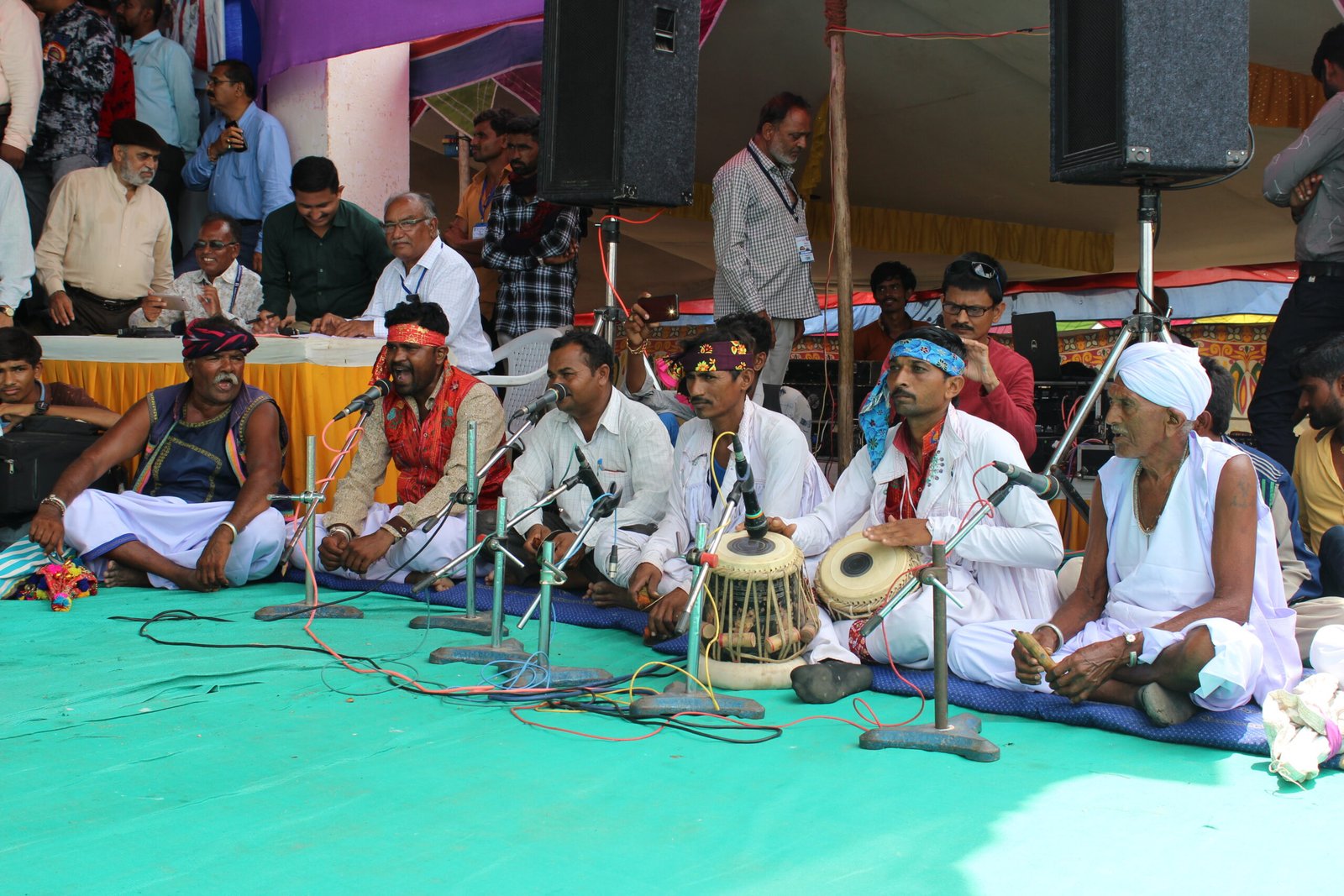
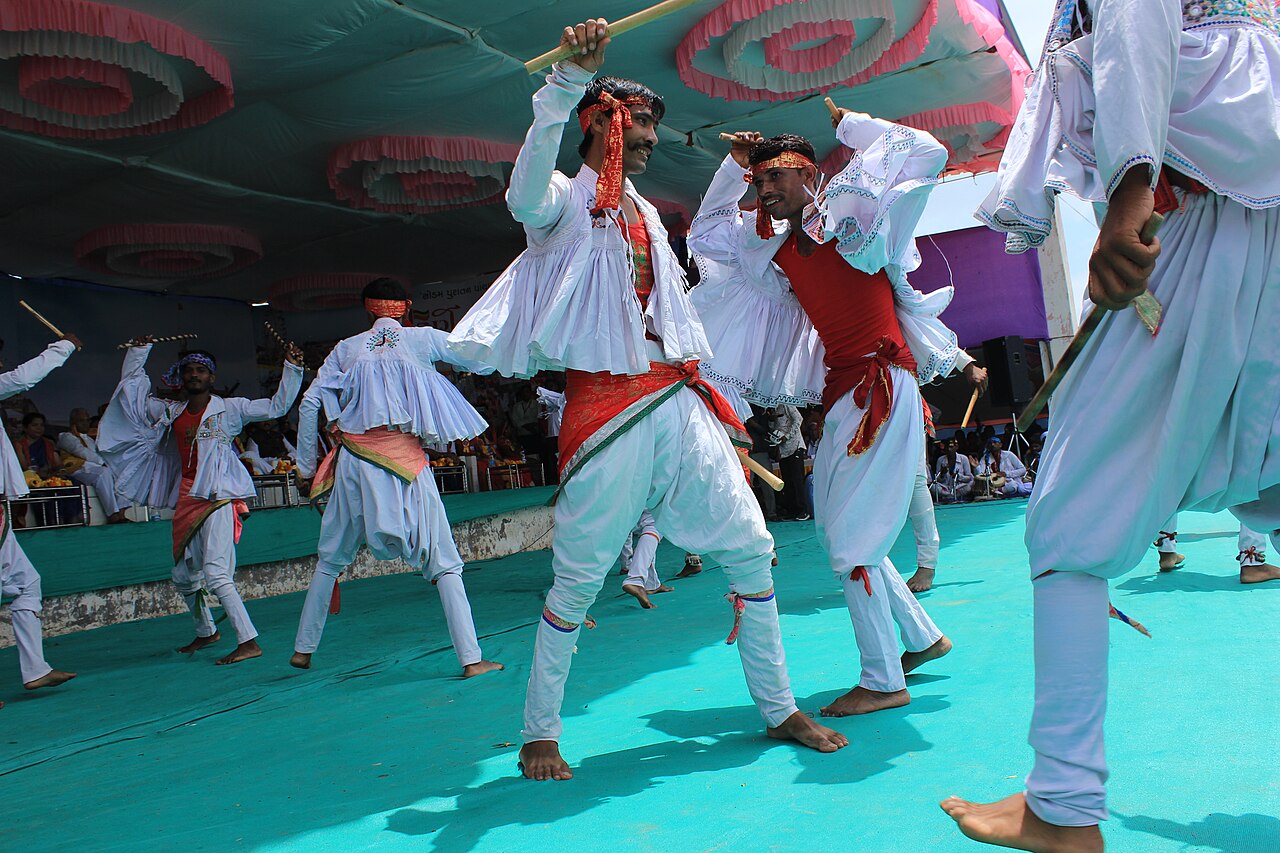
The fair opens when the head priest of the nearby village of Paliyad hoists a tall flag over the temple dome, and from that signal, the match process begins inside a festival of real size. More than fifty thousand people come, and many more in years when the monsoon has been generous. Drummers work in sets of four while double flutes called jodia pavas carry the melody, and the dancing barely lets up from morning until night. The best loved dance is the raas, performed with short wooden sticks knocked against a partner’s, while a hundred or more women turn together in a single circle for the rasada.
It runs for three days during the bright half of the month of Bhadrapada, which falls in late August or early September. This year it will be the closing days of August. The setting is a small village in Surendranagar district, in the Saurashtra region of western Gujarat. The nearest railway station is Thangadh, roughly eight kilometres away, and the nearest airport is Rajkot, about seventy five kilometres away.
Ahmedabad, the city most visitors fly into, sits around two hundred kilometres to the east. For the duration of the fair, Gujarat Tourism puts up a tented village of kuba huts, which neatly solves the matter of a village with no hotels.
One request, sincerely meant. This is an occasion that genuinely matters to the people taking part, not a show put on for cameras. Photograph the colour and the dancing as much as you like, but do ask before turning a lens on anyone hoping to find a husband or wife.
There are not many places left where a marriage can still begin like this, with a year of embroidery, an old story from the Mahabharata and a girl stepping out of a dance to make her choice. The umbrellas take a year to make, and a god’s name has become, over the centuries, the name of the ground where the choosing still happens. That is worth the journey.
Enjoyed this story? Subscribe to Immerse India’s monthly newsletter, “The Peep”. Discover expert travel insights, offbeat destinations, community stories, and thoughtfully curated experiences designed to help you explore India deeper and more consciously.
Words & Insights : Caroline Prescott
Additional Photography: Immerse India
Copyright belongs to the authors. All rights reserved.