Words & Photography: Ujjwal // Additional Photography: Immerse India
The textbook’s best time to visit Rajasthan is October to March and the guidebooks are not wrong. That window is also when prices peak, and every fort courtyard feels like a railway platform. The monsoon in Rajasthan flips all of that.
Summer highs of around 40°C ease back to a far kinder 28°C to 35°C once the rains arrive. Hotels that command a premium in December post their lowest tariffs of the year, so a heritage haveli or a lake-view room comes within reach for a fraction of the winter cost.
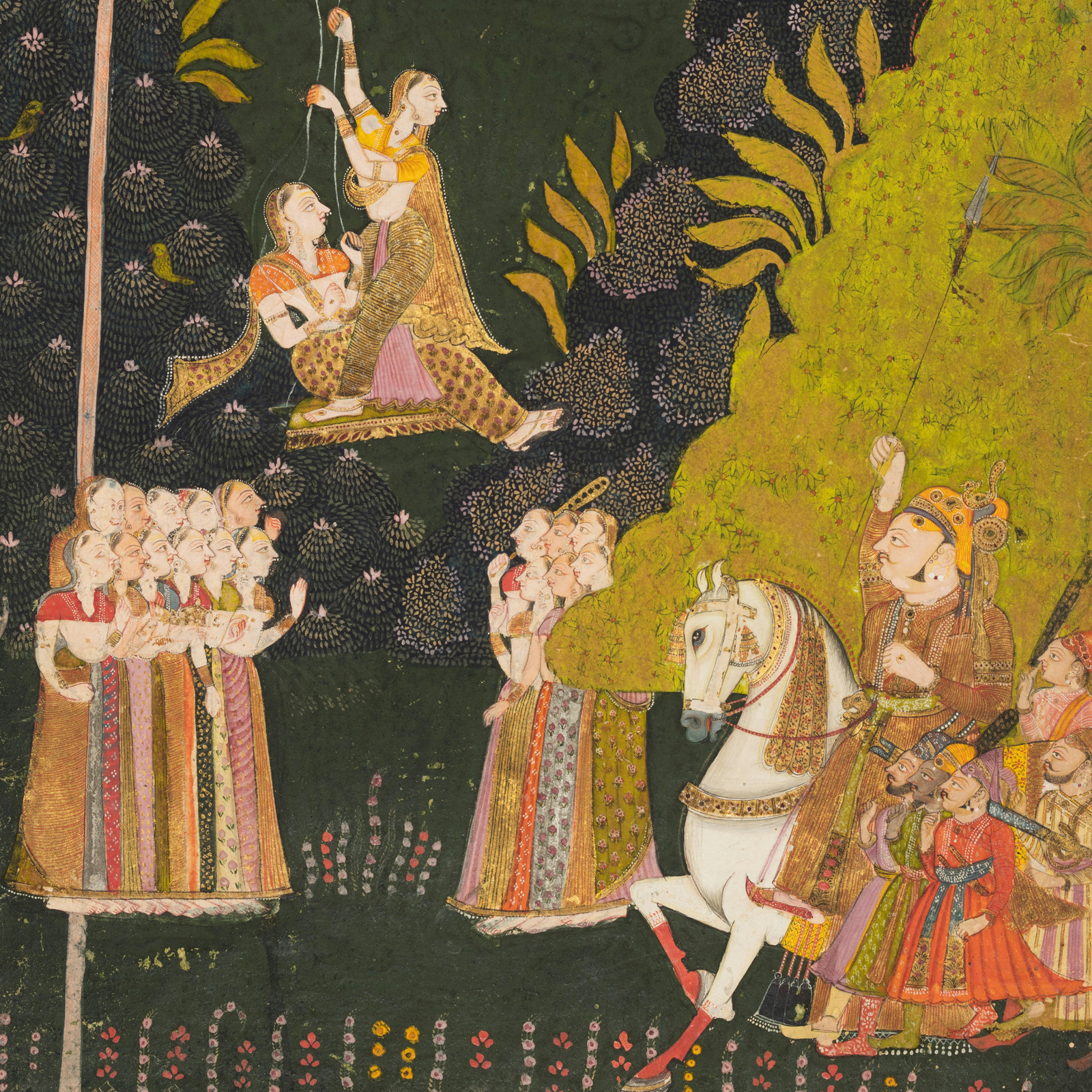
Sightseeing gets easier, too. You can walk a palace at midday without wilting, and the queues at the ticket window all but vanish. Add the fewer crowds and the off-season rates, and the maths starts to favour the rains. The hills turn green, the stepwells fill, and the whole state looks washed clean. The smell of the first shower on a hot stone is worth the trip by itself.The women on the swing are not a modern invention. Rajput court painters were setting down this same monsoon scene in gold and ink centuries ago, peacocks, dark wet trees and all.
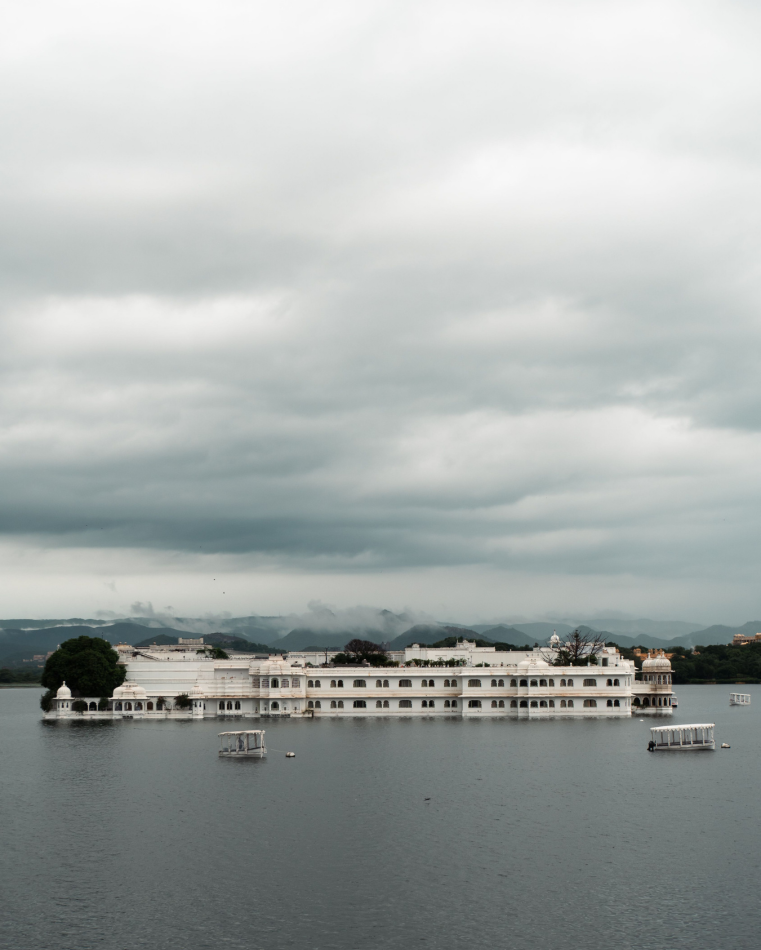
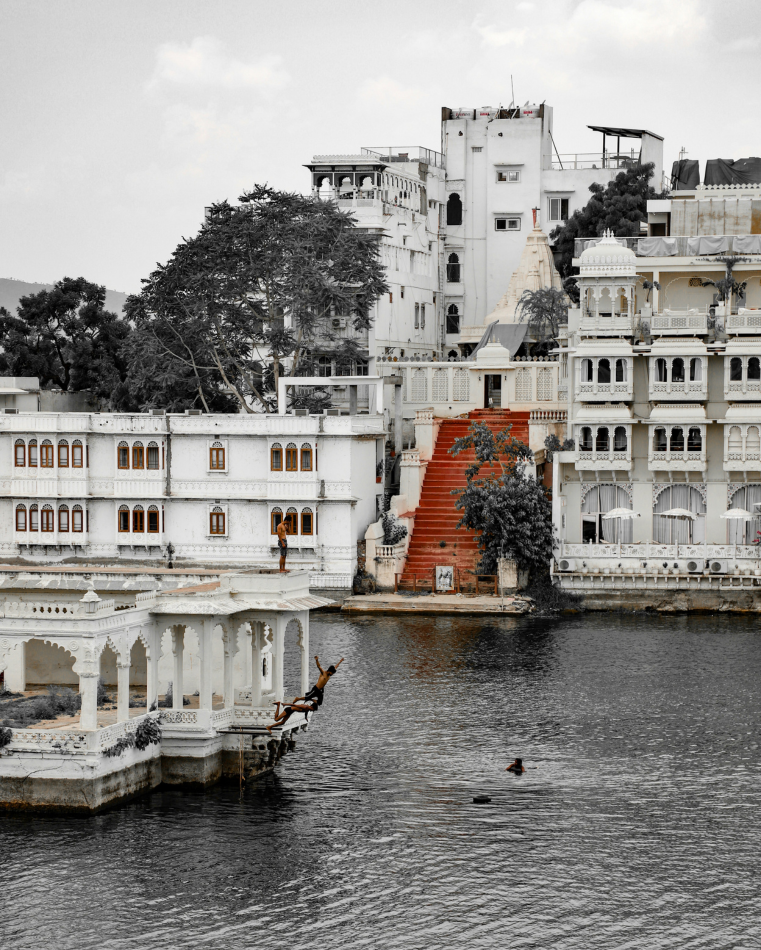
If the name Udaipur means nothing to you yet, let it be where you begin. It is a city built on and around water, a scatter of white palaces, temples and stepped embankments set in a chain of linked lakes, and in the wet season, the water climbs back to the doorsteps it abandoned in May. Go out in a small boat on Lake Pichola at dusk, once the afternoon storm has moved on and the light has gone the colour of milky tea. On one side, the City Palace rises straight from the surface, a cliff of balconies and cupolas. On the other hand, the island palaces, one of them the Taj Lake Palace, a white marble hotel that, in a full lake, appears to rest on the water with no land beneath it at all.
The Taj Lake Palace under the kind of sky that empties Udaipur of its winter crowds. Those low clouds caught on the Aravallis are a sight the dry-season visitor goes home without.
Crowning the ridge above the town is Sajjangarh, which the people of Udaipur call the Monsoon Palace, thrown up by a nineteenth-century maharana for no purpose grander than watching the storms gather over his lakes and hills. Climb to its parapet as the next bank of cloud rolls in off the horizon, and you find yourself in full sympathy with a man who built a palace simply to enjoy the weather. Down in the old town, the rooftop cafes were made for precisely this; a cup of chai going cold in your hand while the sky empties over the lake.
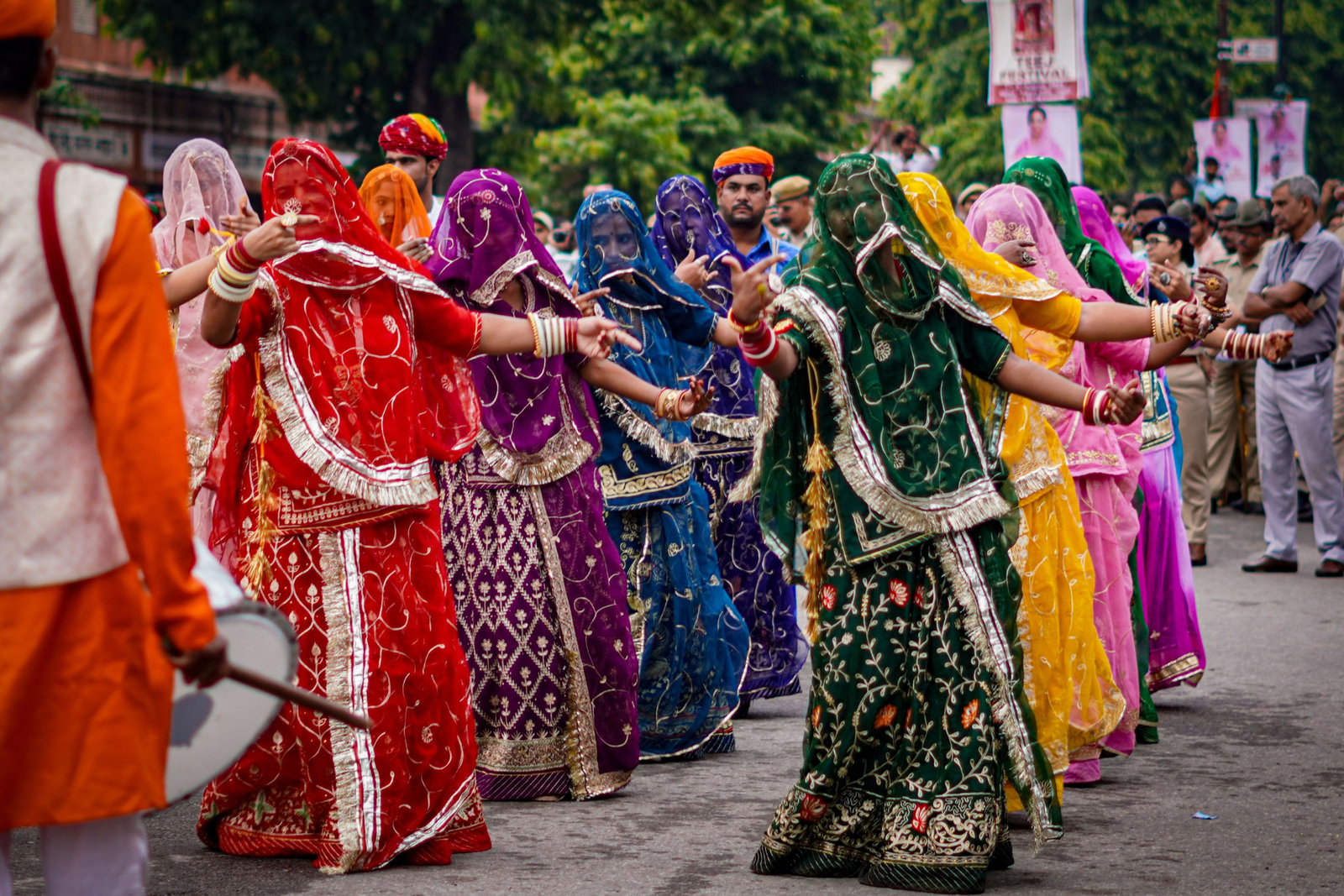
The season does not arrive in Rajasthan unaccompanied. It brings Teej, a festival that is, more or less, the monsoon given a human face. The greenest of its days is Hariyali Teej, which falls on 15 August in 2026. Across the north of India, women dress from veil to hem in the colour of new grass, draw henna over their palms in fine dark vines, and take to swings hung with marigolds from the boughs of old trees. The tale beneath the singing is a love story, the reunion of the goddess Parvati with the god Shiva after a devotion that lasted years, and on this day, the city of Jaipur honours it like nowhere else on earth.
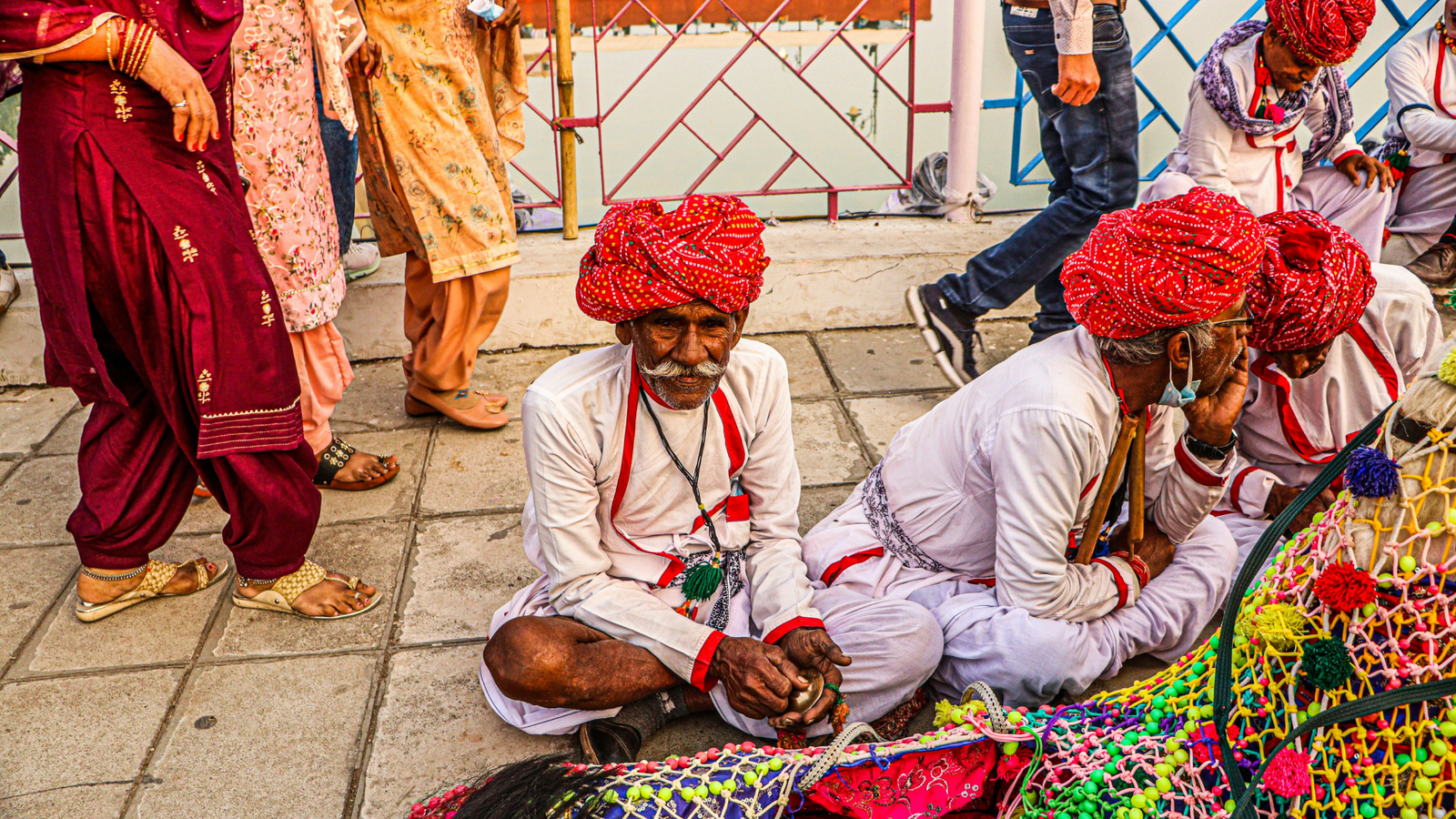
An image of the goddess is carried out of the walled old town at the head of a slow procession of dressed elephants, camels and folk dancers, while the whole rose-pink city pours into its bazaars to watch her pass. Everything is green and gold. The warm sugar scent of ghewar floats in the streets, the syrup-soaked honeycomb sweet that materialises in every confectioner’s window the week the clouds first break. Stand in that crowd as the drums go by, and you are seeing a Rajasthan that no dry-season tour will ever put in front of you.
I will not pretend the season comes without its catches. The downpours land hard and without warning, a day’s plans can dissolve inside an hour, and the deep desert out towards Jaisalmer stays brown and is wiser left for the cooler months. Yet the bargain is a handsome one. You give up the certainty of a dry blue sky, and in return you are handed a desert kingdom rinsed of its dust, its palaces given back to their lakes, its streets brimming with festival, and scarcely another traveller from abroad anywhere in the frame.
That is the Rajasthan I most want to put before people, and it is the season our finest journeys are built around at Immerse India Tours. The desert wears its monsoon for a few short weeks only. I cannot think of a finer moment to come and find it.
This is an excerpt from the travel notes of Ujjwal, founder of Immerse India Tours, a lifelong traveller who built the company on a single conviction, that tourism should enrich the places it touches rather than wear them down, strengthening local communities and protecting the landscapes that draw us to them.
Enjoyed this story? Subscribe to Immerse India’s monthly newsletter, “The Peep”. Discover expert travel insights, offbeat destinations, community stories, and thoughtfully curated experiences designed to help you explore India deeper and more consciously.
Words & Insights : Ujjwal
Additional Photography: Immerse India
Copyright belongs to the authors. All rights reserved.