
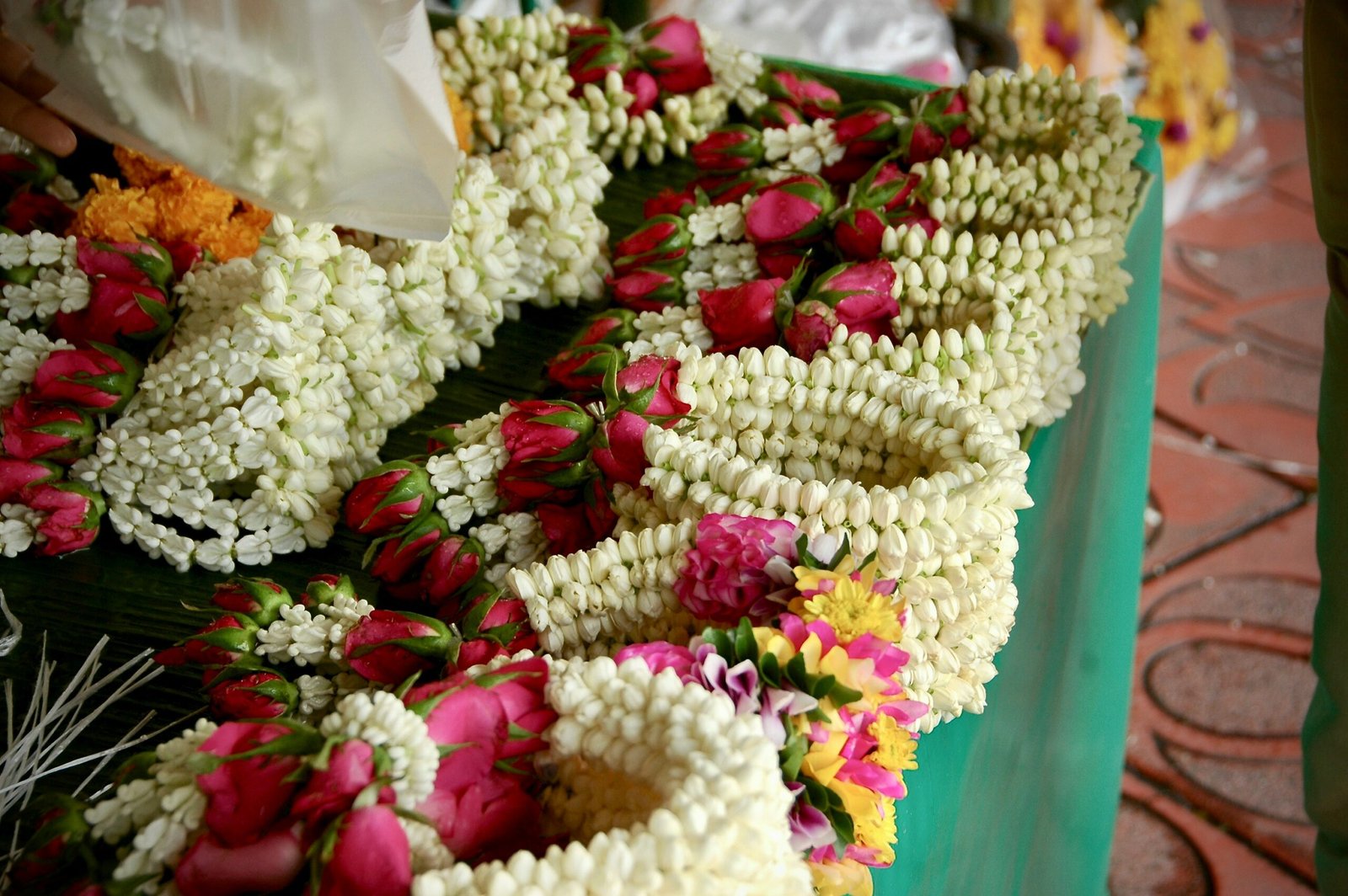
My Madurai jasmine trail began on a quiet summer evening in Tamil Nadu, in the courtyard of a small family home painted in shades of fading ochre. The sun was dipping low, spilling liquid gold over the tiled roof, when I caught the first whisper sweet, heady, almost intoxicating Jasmine.
The next morning, I met Babbu, my driver, who was taking me to the Madurai flower market. Courteous, attentive, and always smiling, he seemed to anticipate what I needed before I asked. Every day, without fail, he placed a fresh Madurai jasmine garland on the rear-view mirror. The moment I stepped into the car, the air filled with that familiar, velvety sweetness.
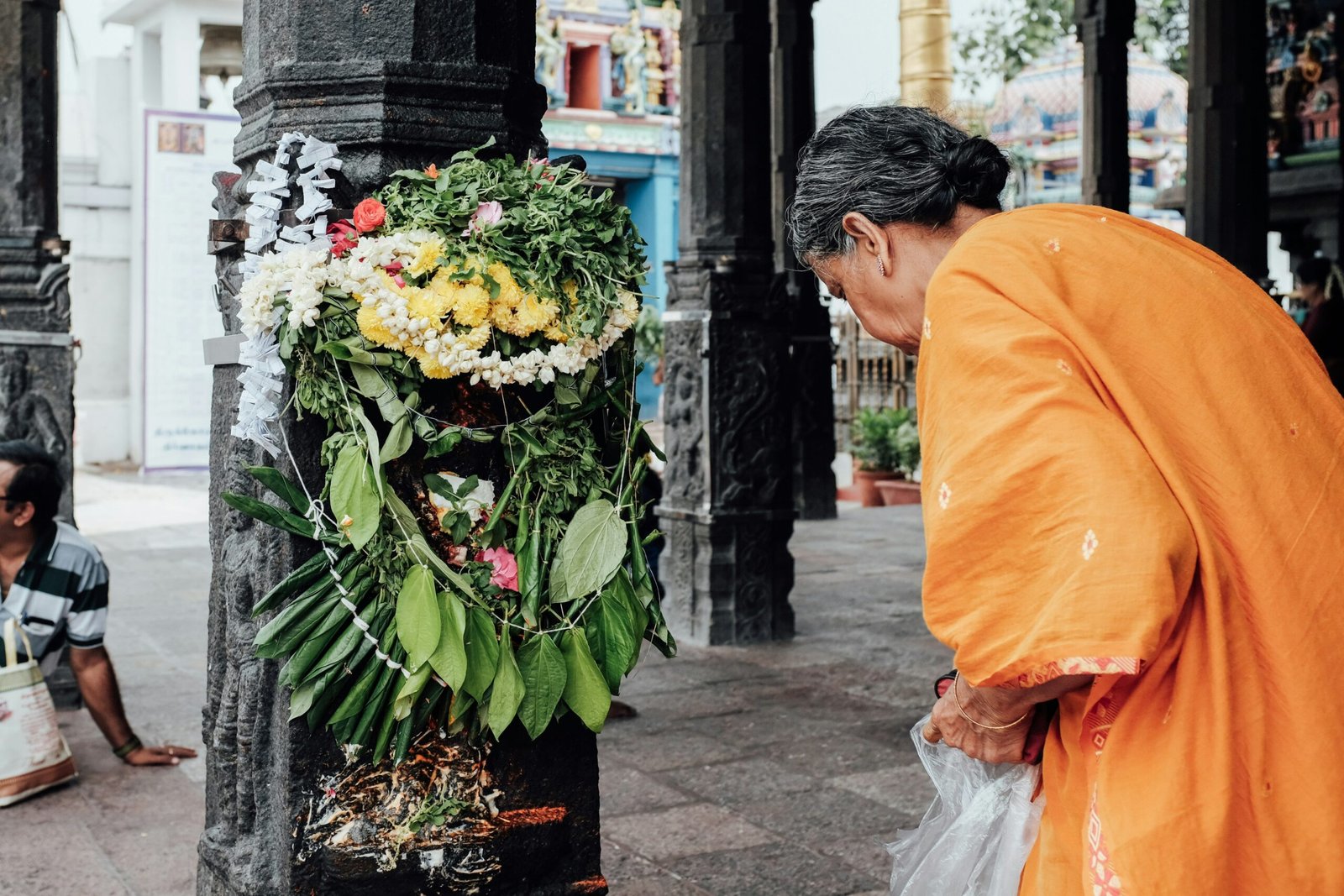
In the Madurai flower market at dawn, crates of jasmine spilt onto the pavement, their pearly buds like beads waiting to be threaded. Women, sari pallus tucked neatly at their waists, worked with practised grace, their fingers moving as swiftly as their voices. The scent hung over everything, both delicate and insistent. The Madurai flower market, nestled between Madurai’s Central Market and the Mattuthavani Bus Stand, pulses with life from the earliest hours of the day.
Even now, far from that ochre courtyard, I can close my eyes and smell it: the heady sweetness of Madurai jasmine petals at dusk, the mingling of incense and temple bells, the laughter of women weaving garlands, and the quiet devotion of a driver who began every journey with a flower.
It was still dark when Madurai began to stir. Somewhere between the first temple bell and the gentle sweep of brooms across stone streets, a fragrance floated through the air—soft, sweet, and impossibly delicate. It came in waves, mingling with the scent of wet earth from the previous night’s rain. I followed it like a thread, winding my way past sleepy tea stalls and small shrines where flickering oil lamps kept the night at bay, until it led me toward the awakening bustle of the Madurai flower market.
The source was easy to find. Outside the Meenakshi Temple, you could see women sitting cross-legged, their hands moving with the rhythm of memory, stringing together buds of jasmine as if they were beading pearls. Each bud was still closed, wrapped in the mystery of the morning. “They’ll bloom fully later, and the scent will last all day.”, one woman smilingly said!
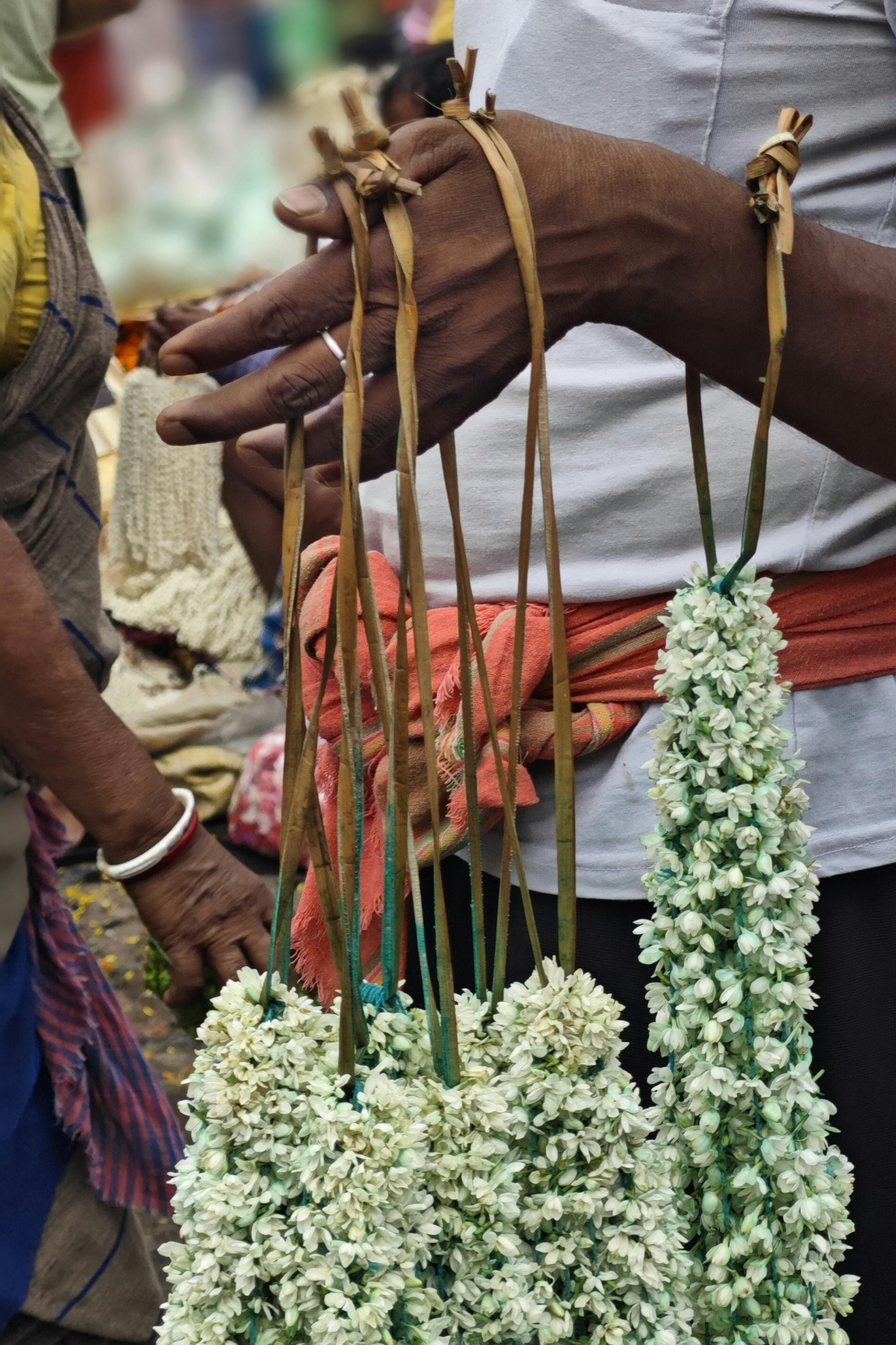
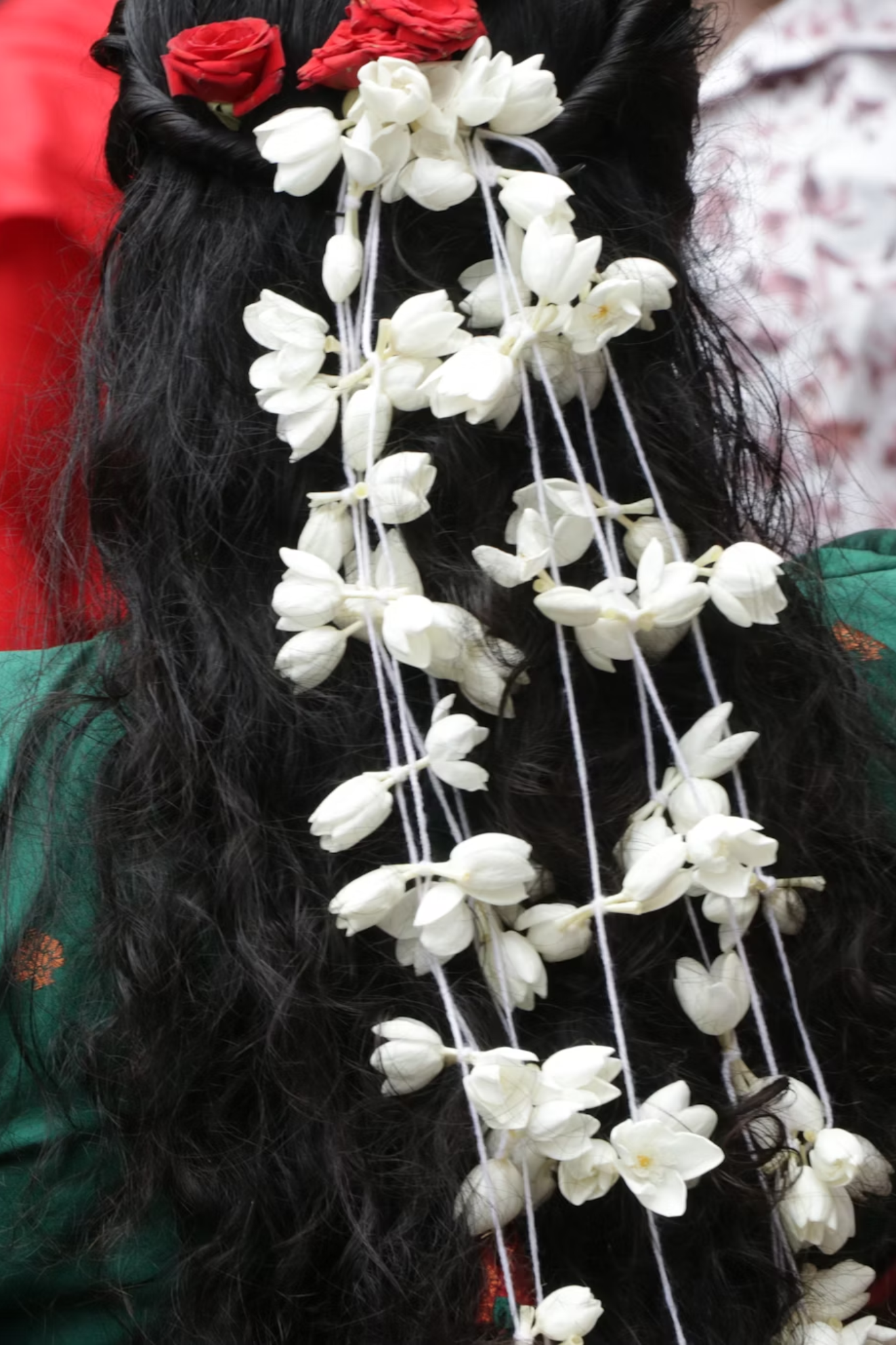
Madurai’s love affair with jasmine runs deep, tracing back to 300 BC, and is celebrated in Sangam poetry and temple art of ancient Tamil scholars. From dawn, women string delicate buds into garlands destined for temples, brides, and festivals. By afternoon, the same flowers may fly out to Mumbai, Delhi, Dubai, Paris, and even the US, or be distilled into luxury perfumes by houses like Dior, Tom Ford, and Guerlain, and be worn by those who indulge in the world’s finest scents. Madurai is probably the place where the world’s best jasmine, the Madurai malli, grows. Thanks to this quiet, backbreaking labour, a humble flower travels the globe, carrying the fragrance of Tamil culture with it.
This is an excerpt from the personal journal of Margaret Jones’ trip to Tamil Nadu in 2024, graciously shared for our Immersive Experiences Series.
Enjoyed this story of Madurai Jasmine? Subscribe to Immerse India’s monthly newsletter, “The Peep”. Discover expert travel insights, offbeat destinations, community stories, and thoughtfully curated experiences which are designed to help you travel deeper and more consciously.
Words & Photography: Margaret Jones
Additional Photography: Mohit Sharma