
Glass Of Masala Chai At A Tapri Means Everything | Immerse India Tours

Why Half A Glass Of Masala Chai At A Tapri Means Everything

Words & Photography: Lakshay Khurana // Additional Photography: Immerse India

If you are travelling through India for the first time, you expect the grand experiences to define your trip. The forts, the stepwells, the Mughal architecture, the palace hotels. What you may not expect is that a roadside tea stall becomes the place where the country suddenly feels coherent rather than overwhelming.

A tapri, for the uninitiated, is a small roadside tea stall that anchors neighbourhood life. You will find them outside railway stations, beside wholesale markets, near corporate office complexes, and in narrow residential lanes.

The first time someone handed me half a glass of masala chai at a roadside tapri, I assumed there had been a mistake. Surely the glass was meant to be filled properly. Instead, I was holding what looked like an unfinished serving of spiced milk tea while scooters zipped past and a man behind a steel kettle poured another batch with alarming confidence.

“It turns out that half a glass is not an accident. It is a system. And like most efficient Indian systems, it looks chaotic until you stand inside it long enough to understand that it works better than many polished alternatives.”

Why Masala Chai At A Tapri Is The Backbone Of Indian Street Tea Culture

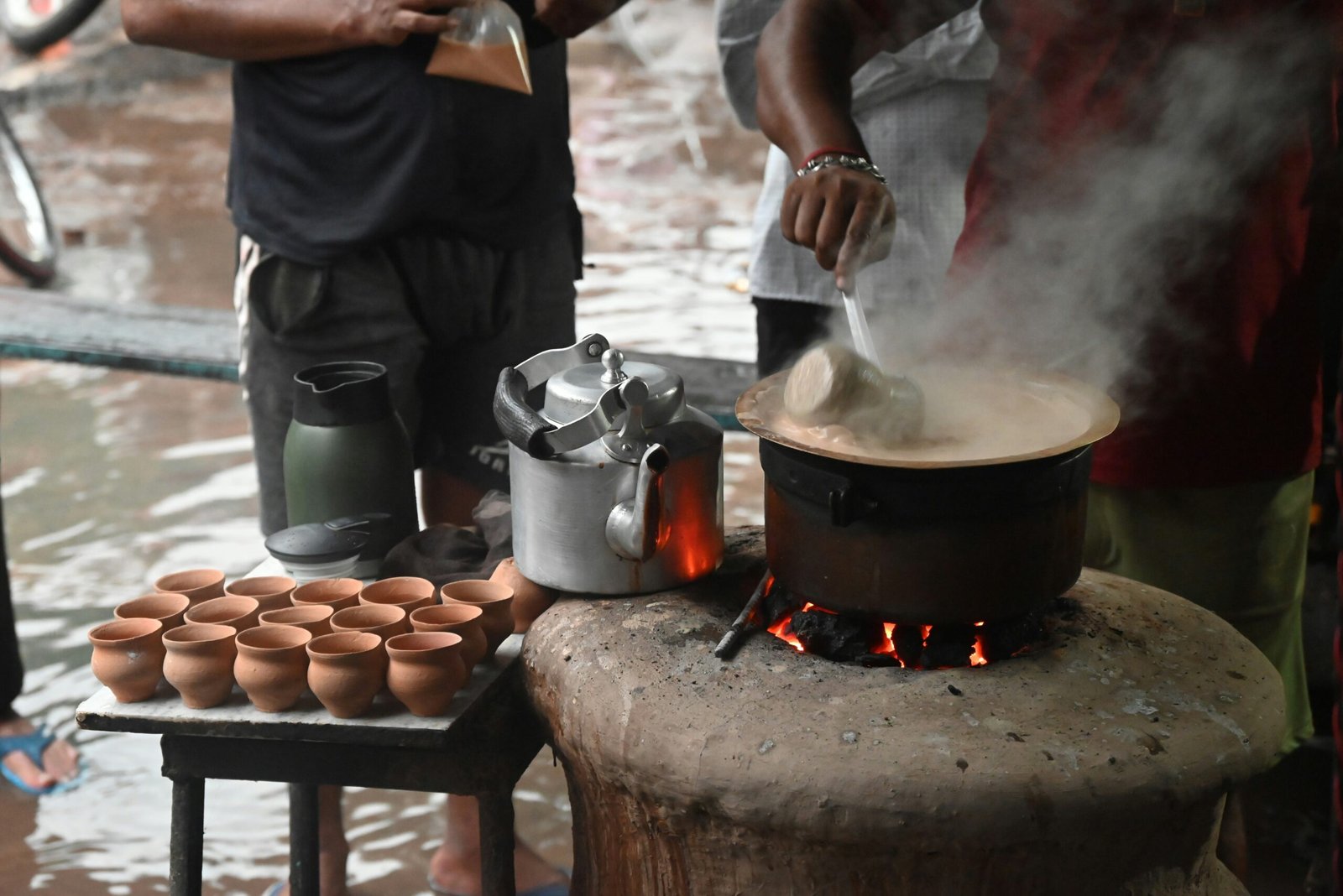
Indian street tea culture revolves around speed, repetition and conversation. The chai wallah prepares spiced milk tea by boiling strong Assam tea leaves directly in milk with sugar. Fresh ginger is crushed into the mix, cardamom pods are split open, and depending on the season, cinnamon or cloves deepen the flavour. The liquid is brought to a rolling boil more than once, intensifying both colour and taste.

The half-glass of masala chai serving keeps everything efficient. Customers do not linger for an hour as they might in a European café. They stop briefly before work, between business meetings, after navigating local markets, or while waiting for a train. The masala chai is hot, sweet, spiced and direct. It demands attention, then allows you to move on.

“For travellers used to speciality coffee culture and extended brunch rituals, this rhythm feels refreshingly functional. There is no menu to decode and no aesthetic performance. You ask for tea, you receive masala chai, and you join the ongoing flow of conversation. That flow is where the real insight lies.”

Masala Chai At A Tapri Is The Backbone Of Indian Street Tea Culture | Immerse India Tours
Germany’s Federal Minister for Digital & Transport, Mr. Wissing, buying vegetables using UPI in Bengaluru. Photo Credit: German Embassy, India

The Tapri As An Everyday Cultural Exchange

If you want to understand what India is thinking about on any given morning, standing at a roadside tea stall is more informative than scrolling headlines. Political debates, economic forecasts, wedding logistics, monsoon speculation, film releases and cricket analysis all circulate through this space.

Cricket discussions in particular carry remarkable intensity. I have listened to animated arguments about batting technique that rival professional commentary panels, and references to Sachin (Tendulkar) surface with predictable frequency. During test matches, the phrase “masala chai break” is not merely symbolic; it is integrated into national viewing habits. Cinema slips into conversation with equal ease. A dialogue from an older Hindi film becomes shorthand for a political situation. A recent song release and its music video is evaluated between sips. No one pauses to publicise that popular culture is being examined; it is simply embedded in daily exchange.

“The remarkable aspect of the tapri is that it collapses hierarchy. Corporate executives, delivery drivers, students and shopkeepers share counter space without ceremony. The half glass in your hand carries no status indicator. It is an equaliser."

For an international visitor trying to interpret India beyond curated experiences, this unfiltered intersection of voices provides context that monuments cannot.

Sensory Immersion Beyond The Guidebook

There is also the sensory dimension, which no travel brochure can adequately summarise.
The aroma of cardamom and ginger rises with steam from the kettle. Milk thickens and caramelises slightly at the edges. The metallic rhythm of ladle against steel forms a steady background cadence. Traffic noise blends with vendors calling out prices for fruit or newspapers. Someone dips a glucose biscuit into their masala chai and times it perfectly to avoid collapse.
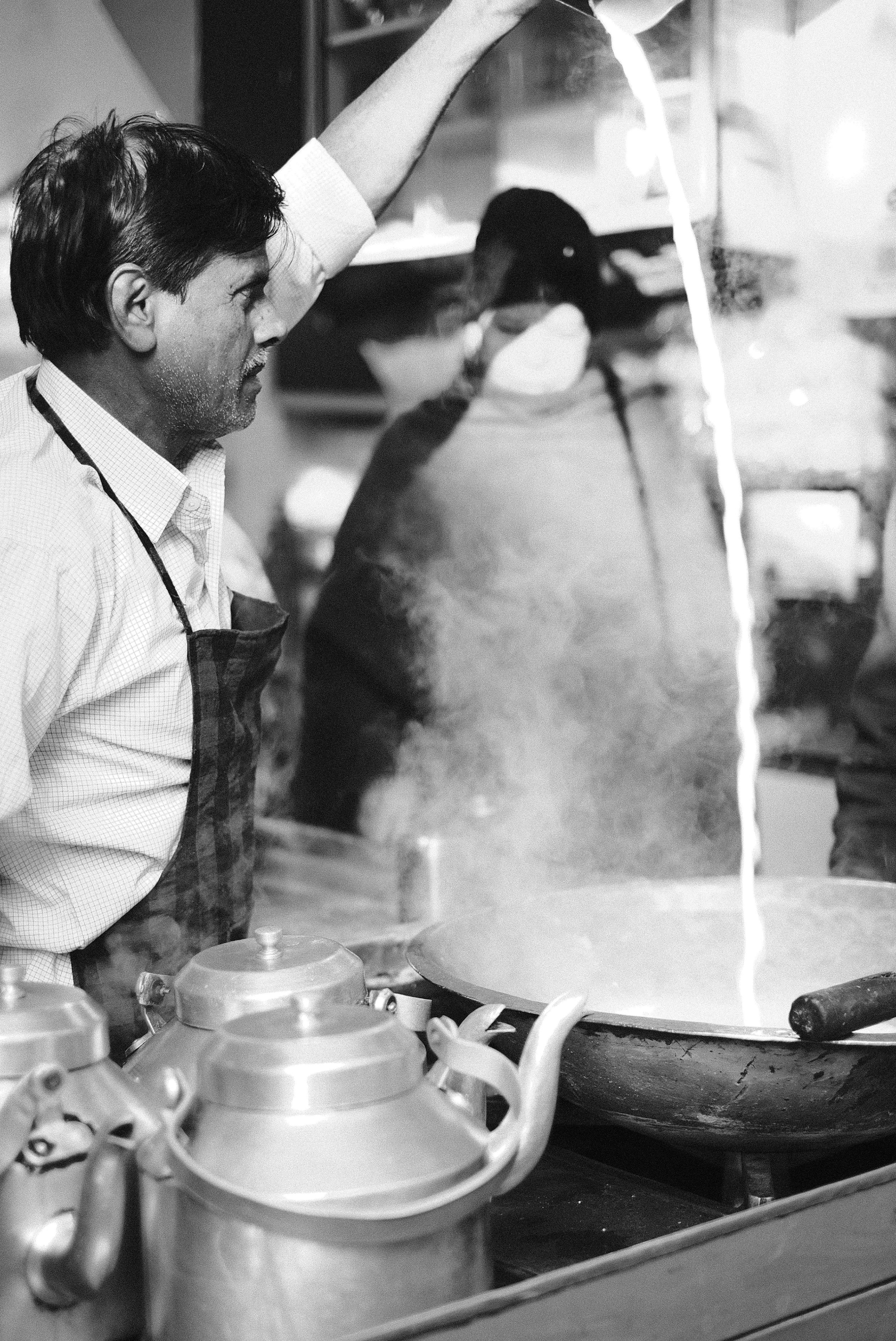
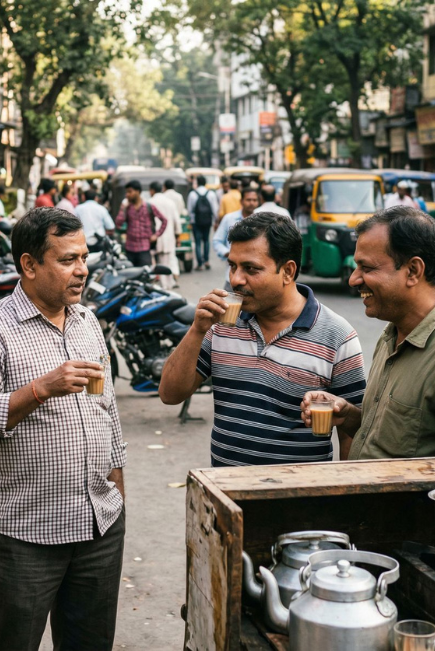
The glass itself is heavy and durable. It warms your palm immediately. There is no handle to create distance between you and the heat. You feel the temperature shift as you sip. Masala chai at a tapri is not delicate. It is robust and unapologetically sweet unless you request otherwise.
For travellers interested in food culture, agricultural supply chains and urban anthropology, that single glass connects tea estates in Assam, spice cultivation in southern India, local dairy networks and neighbourhood micro entrepreneurship. It compresses geography into something drinkable.

From Railway Platforms To Financial Districts

One of the most revealing aspects of the tapri is its presence across vastly different urban landscapes.
At a railway platform in Varanasi, vendors weave through passengers holding kettles and calling out for attention while trains idle in the background. Travellers clutch glasses against the early morning air as they wait for departures.
Masala Chai At A Tapri Is The Backbone Of Indian Street Tea Culture | Immerse India Tours
“India’s tech future moves every day with its people — efficient public infrastructure like metro systems reflects a nation quietly engineering scale, speed, and connectivity for the next generation of innovators.”
immerindia
“From unicorn startups to everyday livelihoods, India’s digital economy is visible on its streets — where technology empowers work, fuels entrepreneurship, and reshapes how a billion people live and earn.”
In Mumbai’s financial districts, roadside tea stalls operate outside glass office towers. Suited professionals step out between meetings for a quick cup before returning to stock market dashboards.
In Jaipur’s old city, traders pause negotiations for tea served beside pink sandstone facades. In Ahmedabad’s textile markets, shopkeepers gather before lifting shutters for the day.

“The environments vary dramatically, yet the practice remains consistent. For visitors moving between heritage hotels and guided city tours, the tapri provides continuity. It is a fixed reference point in a country that can otherwise feel immense."

Why Masala Chai Matters for the Modern Traveller

Modern-day travel has shifted toward seeking proximity rather than insulation. Travellers who want to understand India beyond architecture and curated experiences need points of entry into daily life.
A palace suite in Udaipur demonstrates historical opulence. A knowledgeable guide can narrate centuries of dynastic politics.
But a roadside tea stall situates you inside the present.
Standing at a tapri requires no special preparation. You order tea. You hold the glass carefully because it is hot. You listen. Even if you do not understand every word being spoken around you, you begin to sense the cadence of the exchange.
That integration alters perspective more effectively than many orchestrated experiences that are usually on offer.
Masala Chai At A Tapri Is The Backbone Of Indian Street Tea Culture | Immerse India Tours
“India’s tech future moves every day with its people — efficient public infrastructure like metro systems reflects a nation quietly engineering scale, speed, and connectivity for the next generation of innovators.”
Masala Chai At A Tapri Is The Backbone Of Indian Street Tea Culture | Immerse India Tours
“From unicorn startups to everyday livelihoods, India’s digital economy is visible on its streets — where technology empowers work, fuels entrepreneurship, and reshapes how a billion people live and earn.”

So Why Does It Mean So Much?

Because it reduces complexity into something accessible.
India operates at an enormous scale, economically, culturally and geographically. A half glass of spiced milk tea presents a way to participate in that scale without being dazzled by it.
It is inexpensive yet layered. Brief yet memorable. Local yet universal.

“Long after grand monuments and curated dinners merge together in memory, I find that I recall the tactile warmth of that glass and the sharp sweetness of ginger far more vividly. Not because it was framed as profound, but because it was ordinary in a way that revealed social structure, conversation and continuity all at once.That is why half a glass of masala chai at a tapri carries more meaning than its size suggests.”

This is an excerpt from the travel notes of Lakshay Khurana, an avid traveller and contributor to Immerse India’s travel stories, who brings destinations to life through thoughtful narratives and personal journeys.
Enjoyed this story? Subscribe to Immerse India’s monthly newsletter, “The Peep”. Discover expert travel insights, offbeat destinations, community stories, and thoughtfully curated experiences designed to help you explore India deeper and more consciously.
Words & Insights : Lakshay Khurana
Additional Photography: Immerse India
Copyright belongs to the authors. All rights reserved.

Related Stories

From Classrooms to Tech Industry: India’s Young Tech Generation and a Nation in Transformation

From Classrooms to Tech Industry: India’s Young Tech Generation and a Nation in Transformation

Everything You Should Know Before Your India Travel

Travelling through India becomes richer when you arrive prepared and open minded. This guide brings together practical advice cultural understanding and thoughtful tips to help you travel with confidence and respect.

Explore Jaipur in the morning: An Easy cycle tour with a local

Jaipur feels calmer in the early morning when streets are quieter and the city breathes slowly. Cycling with a local offers a simple and genuine way to experience everyday life beyond monuments.