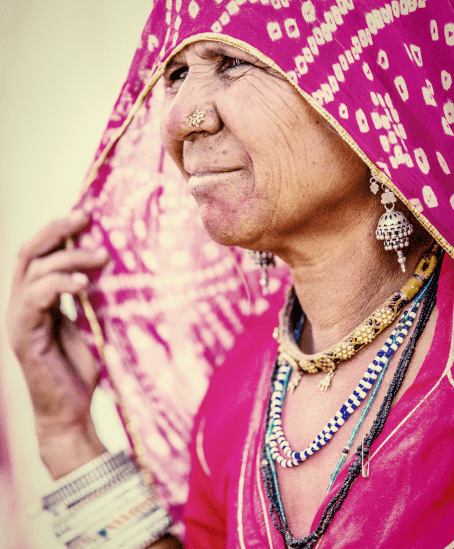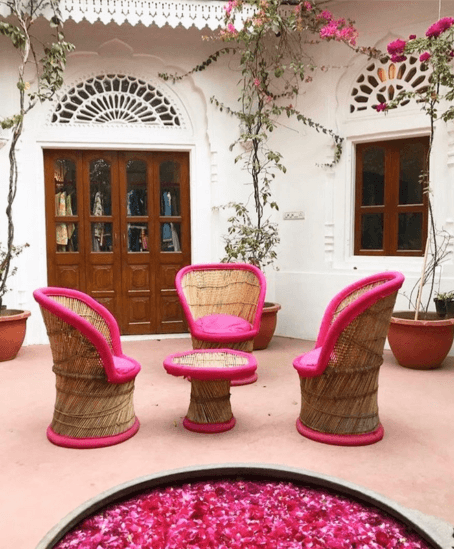
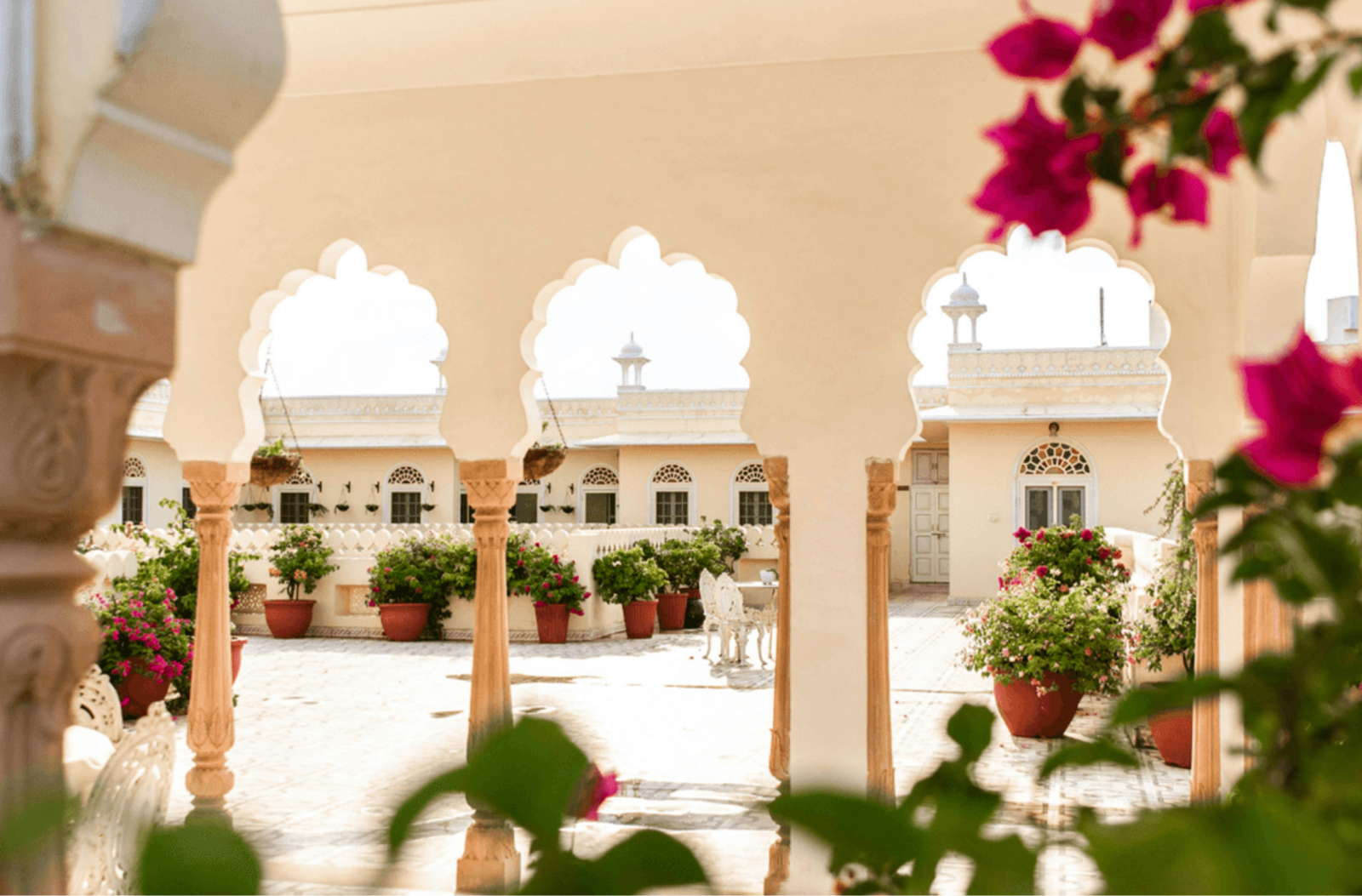
We started from the old walled city, where the markets were waking up. Tea vendors set up their stalls, filling the air with the aroma of chai and fried snacks. At Raj’s suggestion, we stopped at a busy tea shop. “This is where the city begins its day,” he said, handing me a glass of steaming masala chai. I watched the vendor pour the tea from a height, the liquid frothing as it met the glass, rich and fragrant. This early-morning tea at a local shop was the perfect way to explore Jaipur, discovering the city’s sights, sounds, and flavours at every step.
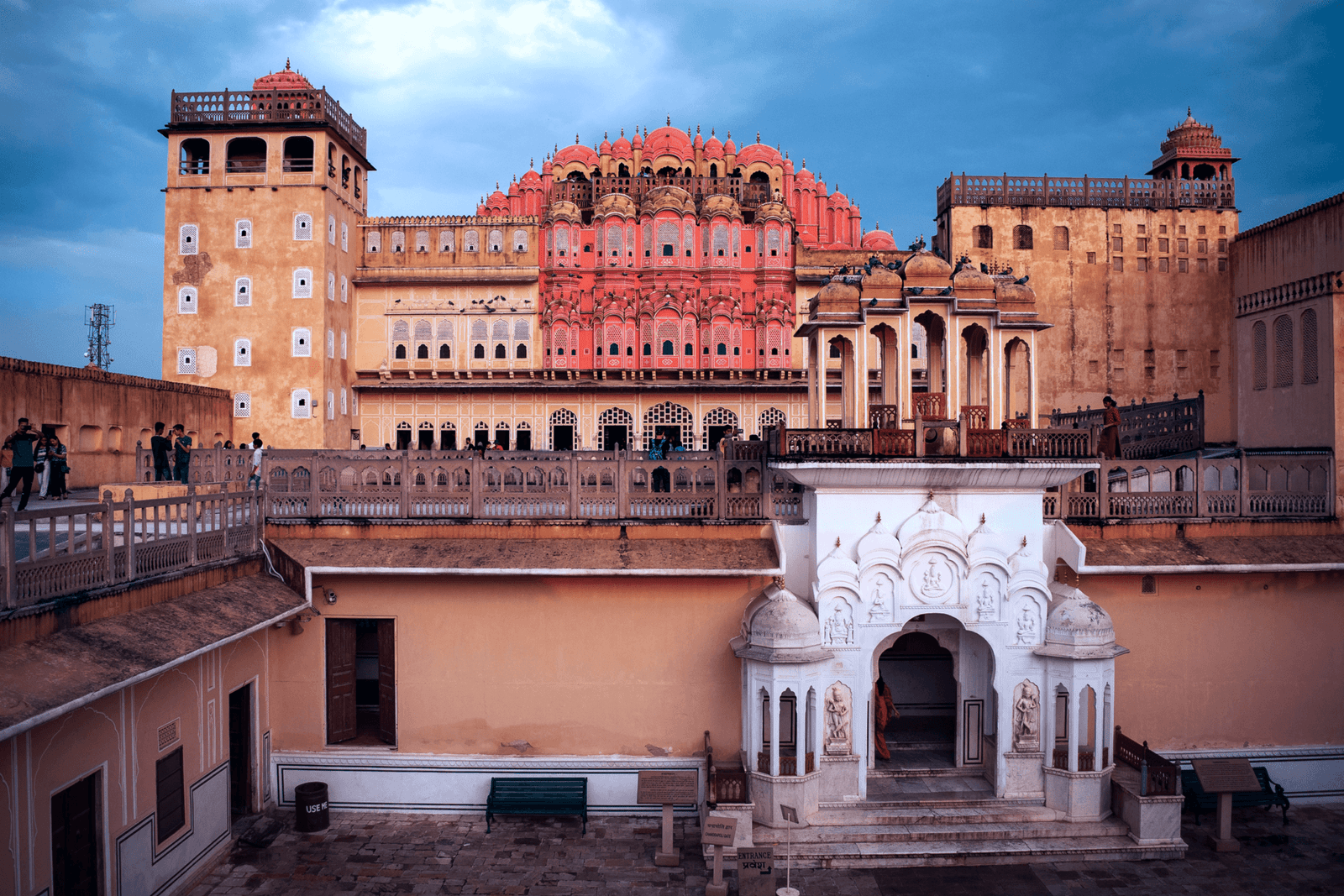
From there, we cycled past the iconic Hawa Mahal, its intricate lattice windows catching the first rays of sunlight. The city’s grid layout, designed by Maharaja Jai Singh II, made for a smooth and leisurely ride through its historic quarters. Soon, we reached the royal lanes of the City Palace and Jantar Mantar, where the grandeur of Jaipur’s past stood tall against the sky.
At Raj’s suggestion, we went inside Hawa Mahal, exactly opposite to what most visitors do, as they only stop for a photo of the stunning façade. Most tourists don’t realise that Hawa Mahal is not just a pretty wall but an extension of the City Palace, built in 1799 by Maharaja Sawai Pratap Singh. The palace’s unique pyramid-shaped façade, with 953 small windows, or ‘jharokhas’, allowed the royal women to discreetly watch street festivals, processions, and daily life without being seen.
Walking through the narrow corridors and looking out from the lattice windows, I could almost imagine the royal ladies leaning forward to catch glimpses of Jaipur’s bustling streets below. The intricate pink sandstone latticework not only offered privacy but also allowed a constant flow of breeze, earning the palace its name—‘Hawa Mahal’ or Palace of Winds. The gentle wind, the sounds of the city waking, and the early morning sunlight falling on the honeycomb-like façade created a surreal connection to Jaipur’s history. Experiencing it this way was the perfect way to explore Jaipur Hawa Mahal beyond the usual tourist viewpoint. For a moment, I felt transported back in time, seeing the city from the perspective of those who once ruled it in quiet observation—a side most visitors miss entirely.