
It was the perfect beginning to our Odisha Tribal Tour, a journey designed to reveal the state’s most authentic cultural layers.
Odisha is home to a large and diverse tribal population, with more than 60 distinct tribes, including the Bondas, Santhals, and many others, each with its own dialects, customs, and traditions. To gain a deeper understanding of this rich heritage, we made a stop at the Odisha Tribal Museum in Bhubaneswar during my odisha tribal tour. The museum offers an immersive experience, with carefully recreated tribal huts, traditional weapons, costumes, terracotta artefacts, jewellery, and ceremonial insignia, providing a comprehensive glimpse into tribal life. The museum visit provided important context before continuing deeper into our Odisha Tribal Tour across rural landscapes.
For all of us, the museum was a highlight of the city visit. Seeing the creativity, craftsmanship, and cultural depth of Odisha’s tribes firsthand was both eye-opening and humbling. Our guests from Europe were especially fascinated by the diversity and authenticity of these communities, whose lives and traditions are so far removed from modern urban experiences, yet remain vibrantly alive.
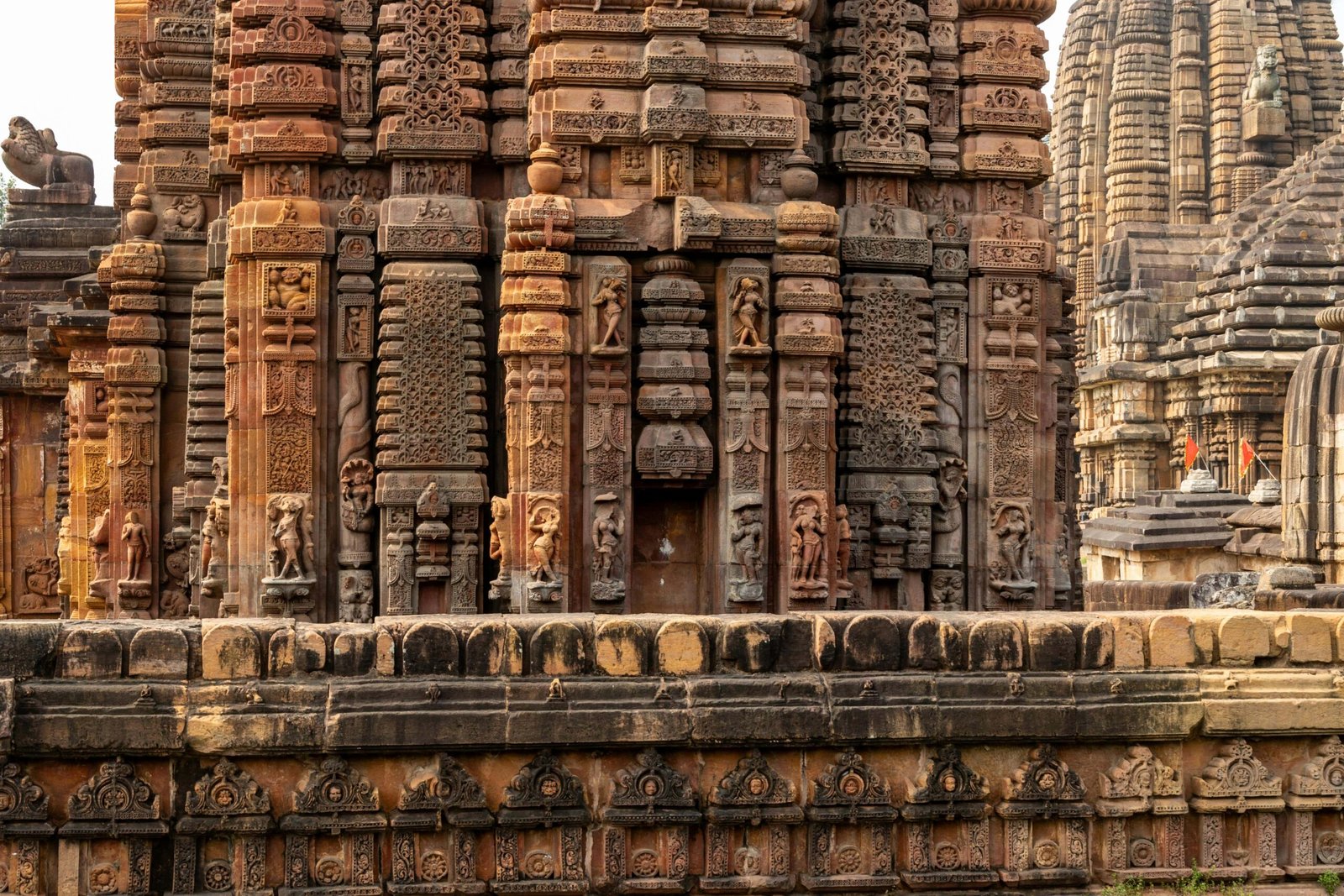
From Bhubaneswar, we travelled to Puri and Konark, destinations where art, devotion, and heritage converge in perfect harmony. The Sun Temple at Konark, a UNESCO World Heritage Site, left all of us utterly speechless. Every inch of its monumental chariot-like structure is adorned with intricate stone carvings, each telling stories of mythology, daily life, and cosmic symbolism.
As historian Stella Kramrisch eloquently put it, “Konark is not merely stone; it is a poetic vision in sculpture, a monumental hymn to the Sun.” Walking around the temple, it was impossible not to marvel at the generosity of the artistry, including the sensuous elegance of many of the sculptures. We were deeply absorbed in the experience now, with a testament to the temple’s celebration of life, fertility, and human creativity.
In Puri, the spiritual aura of the temple town blended seamlessly with its serene coastal charm. Situated on the Bay of Bengal, Puri forms one point of the Golden Triangle of Eastern India, along with Bhubaneswar and Konark. The Jagannath Temple, one of India’s most revered pilgrimage sites, draws thousands of devotees every year, famous for its annual Rath Yatra festival that showcases Odisha’s vibrant culture.
Away from the crowds and beach parties, its pristine shores provide a tranquil escape from city life, making it ideal for reflection and leisurely exploration. While temples reflect Odisha’s spiritual grandeur, the Odisha Tribal Tour takes travellers beyond monuments into living heritage. Historic stays like Dhenkanal Palace add depth and continuity to the Odisha Tribal Tour experience.
The real adventure of our Odisha tribal tour began deep in the state’s interior. From Phulbani, the “City of Flowers,” we ventured into remote villages to meet the Kutia Kondh, renowned for their distinctive tattoos. The women’s geometric and floral designs—symbols of clan identity—left my European companions amazed and respectful of their living traditions.
Life here is simple yet resilient, full of authenticity. The Kutia Kondh practice shifting cultivation and hold a profound spiritual bond with the forests they consider sacred. As Mahatma Gandhi said, “The world has enough for everyone’s need, but not enough for everyone’s greed”—a principle vividly reflected in their sustainable, mindful way of life. Encounters like these define the heart of an Odisha Tribal Tour.
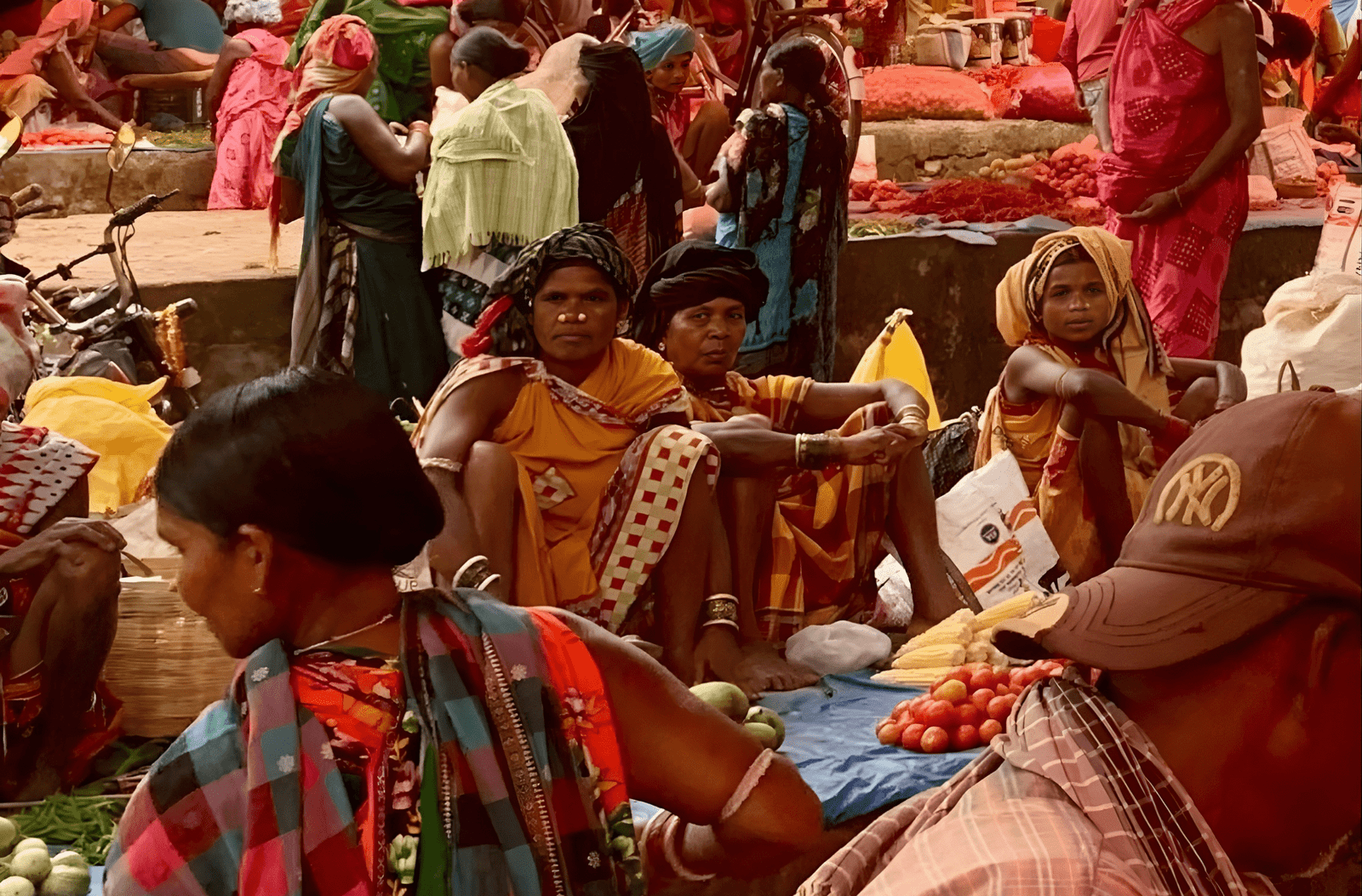
One of the highlights was visiting the weekly market in Kotagarh, a vital hub for the Kutia Kondh community. From indigenous fruits and vegetables to bronze sculptures, the market offered a vivid picture of daily life in a tribal village. The market is more than commerce; it’s a social gathering where stories are exchanged, relationships are built, and culture thrives. Weekly haats such as Kotagarh are essential highlights of any Odisha Tribal Tour.
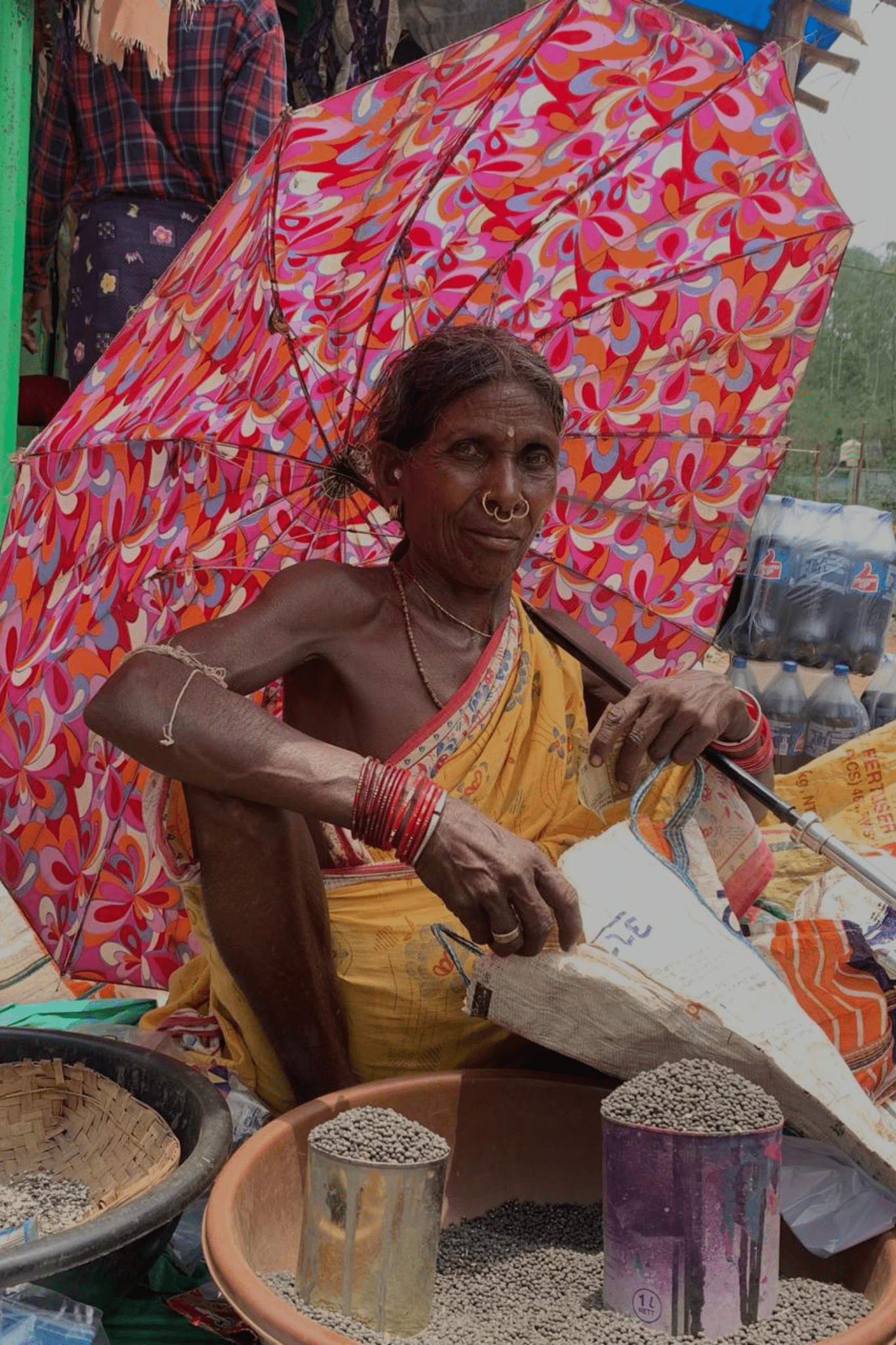
Metalwork found its place, too. I noticed small brass and bell-metal artefacts, including figurines and traditional ornament boxes, often sold at Chatikona. From fresh forest produce and farm yields to tribal handicrafts and functional tools, the variety was striking. Markets like Chatikona reveal why an Odisha Tribal Tour feels immersive rather than observational.
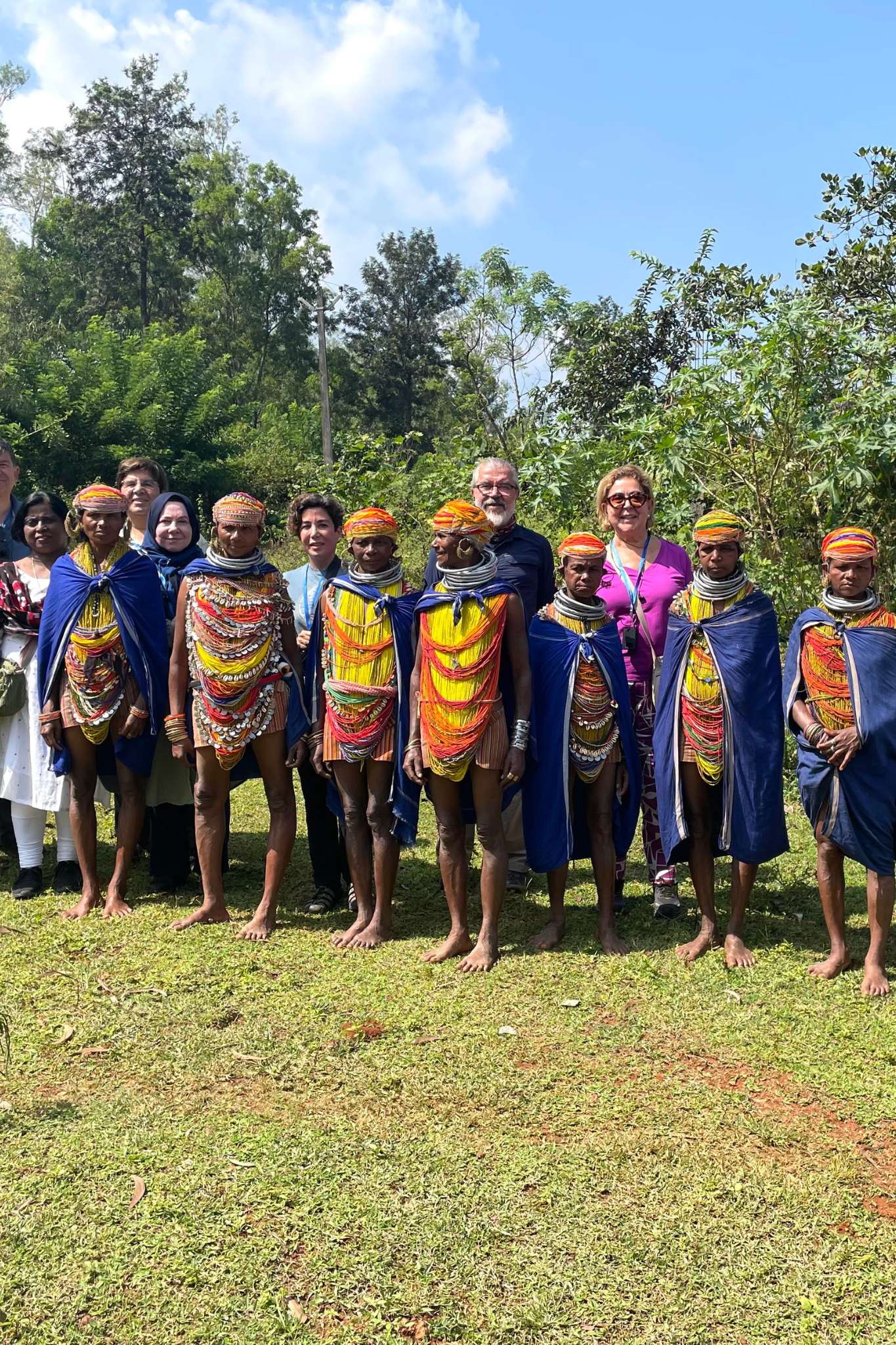
We dedicated Thursday to exploring the Bonda tribe, one of India’s most isolated and fascinating communities. The Onukudelli market was a riot of colour, with Bonda women adorned in vibrant beaded necklaces and silver ornaments, each piece telling a story of heritage and identity.
Nearby, the Duduma Waterfall offered breathtaking views of the surrounding hills, adding a serene backdrop to the vibrancy of tribal life. In Gadaba village, we were treated to the traditional “Dhemsa” folk dance, performed by the local girls. Watching them dance was mesmerising as their movements, laughter, and music seemed to capture the rhythm of life itself.
Cultural performances such as Dhemsa bring rhythm and vitality to an Odisha Tribal Tour. Their entire world revolved around these traditions, and in turn, these rituals kept their community alive, vibrant, and deeply connected to their land and culture. Meeting the Bonda community remains one of the most powerful experiences of our Odisha Tribal Tour.