Words & Photography: Lakshay Khurana // Additional Photography: Immerse India
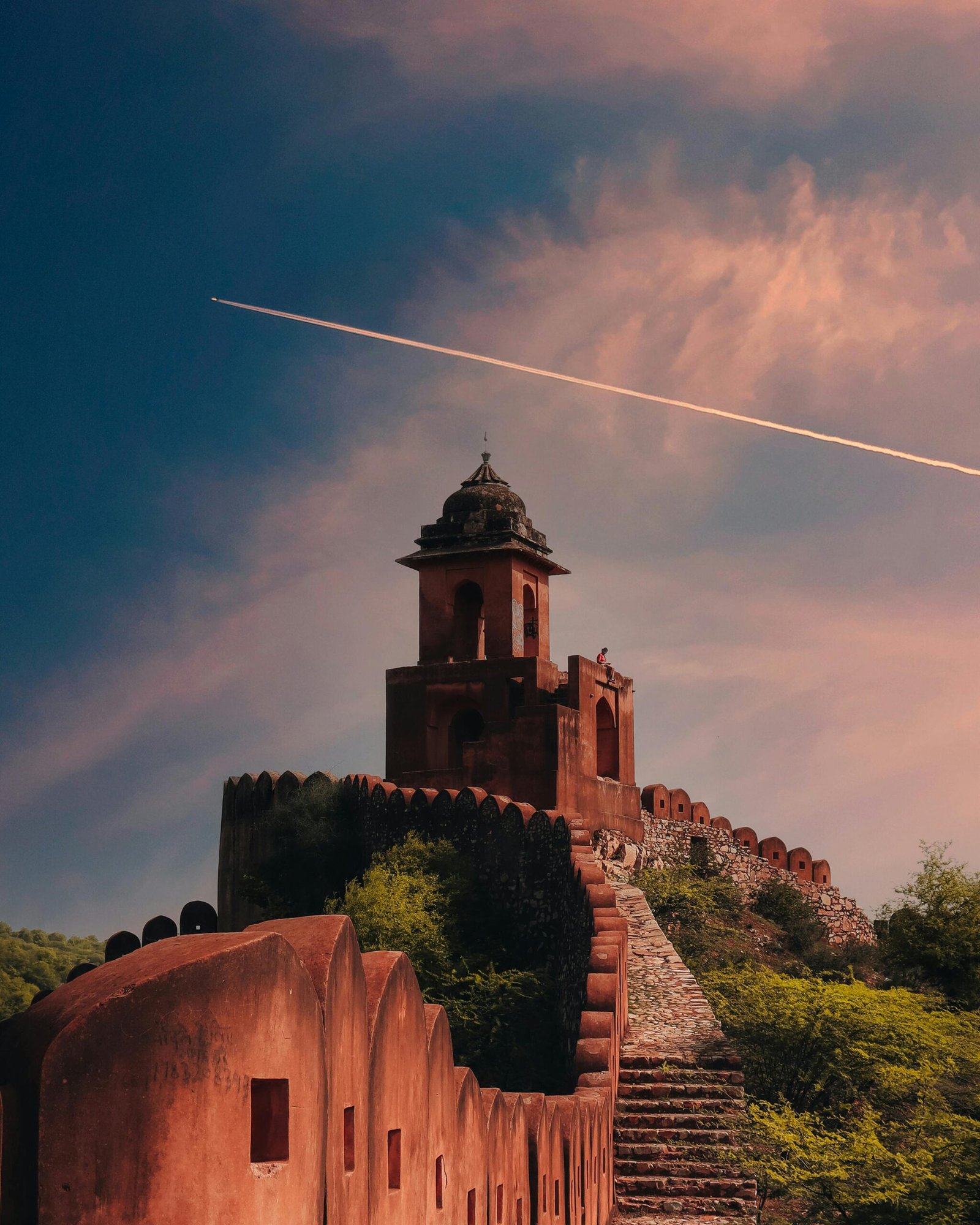
When Raja Man Singh I began constructing Amer Fort in 1592, he had a practical problem. A magnificent fort on a hill is only as safe as the hills surrounding it. So he also commissioned a massive defensive wall to run across the Aravalli ridgeline, encircling Amer town and cutting off the approaches that an enemy army might use. The wall was studded with watchtowers at regular intervals, from which soldiers could spot trouble long before it arrived at the gates.
This wall, also known as the Great Wall of Amer, stretches for approximately 12 kilometres across the mountains surrounding Amer. It is one of the longest fortification walls in India, built from red sandstone, and sits directly opposite the main façade of Amer Fort on the other side of the valley. The soldiers stationed on it would have spent their days staring at the fort they were protecting.
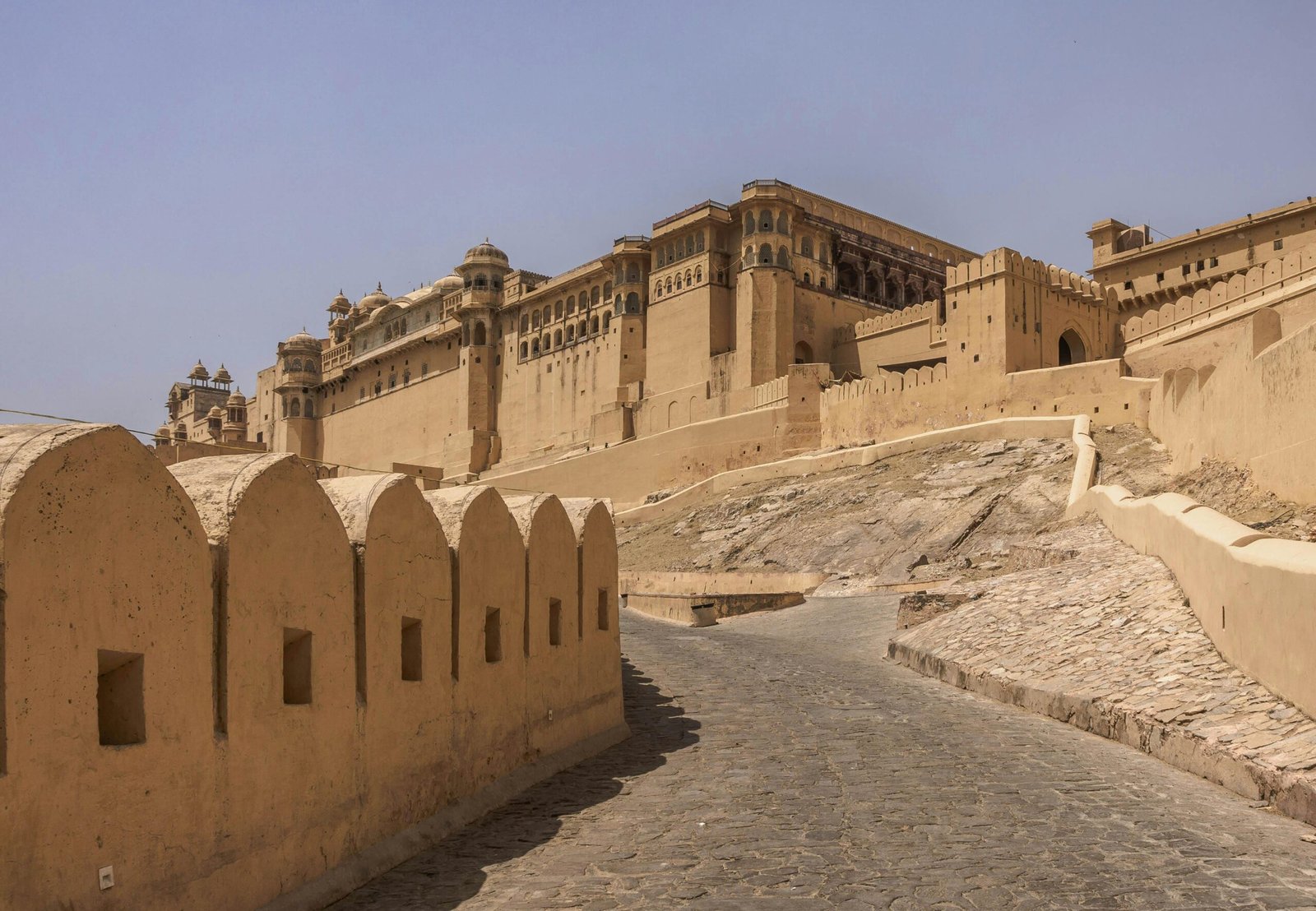
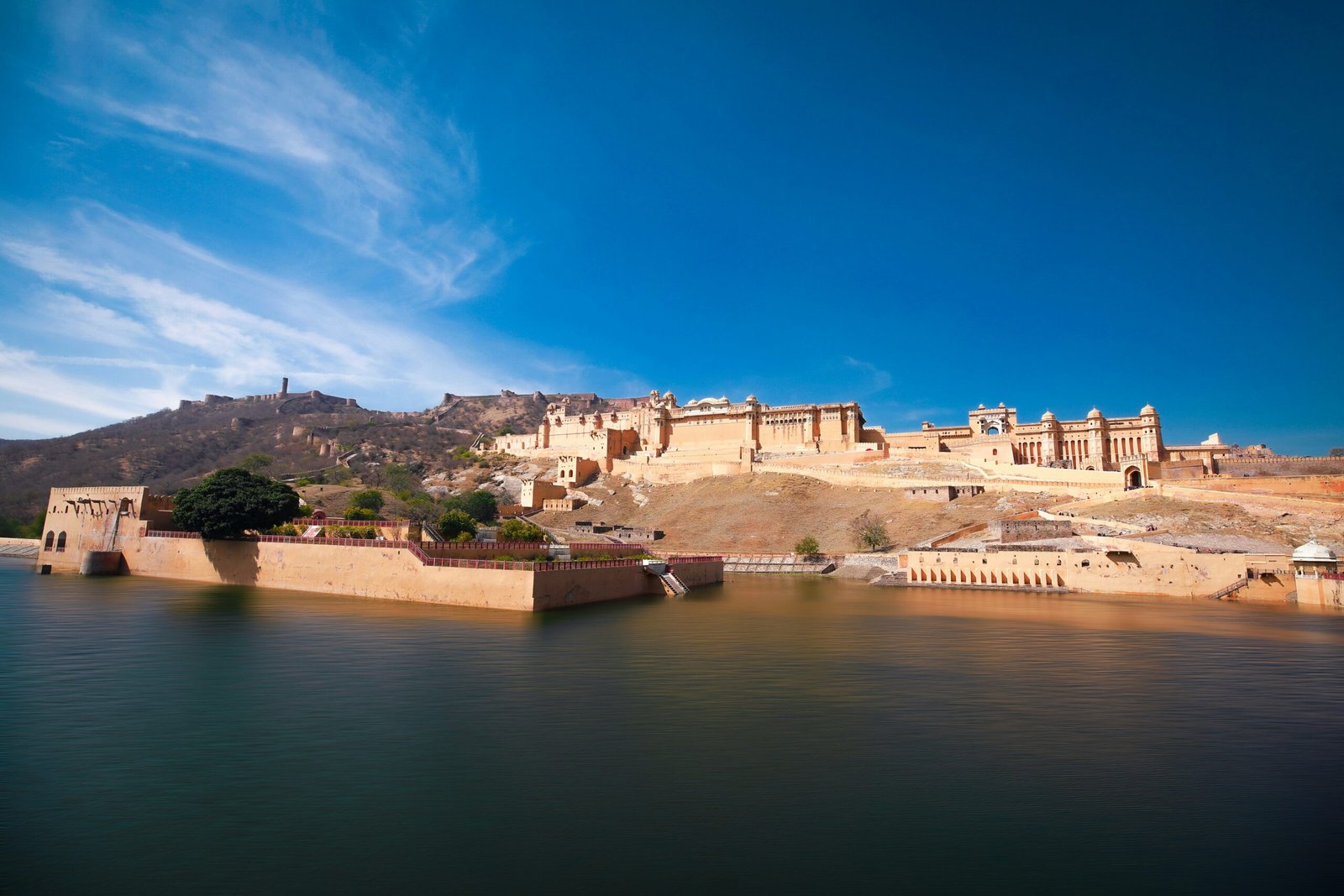
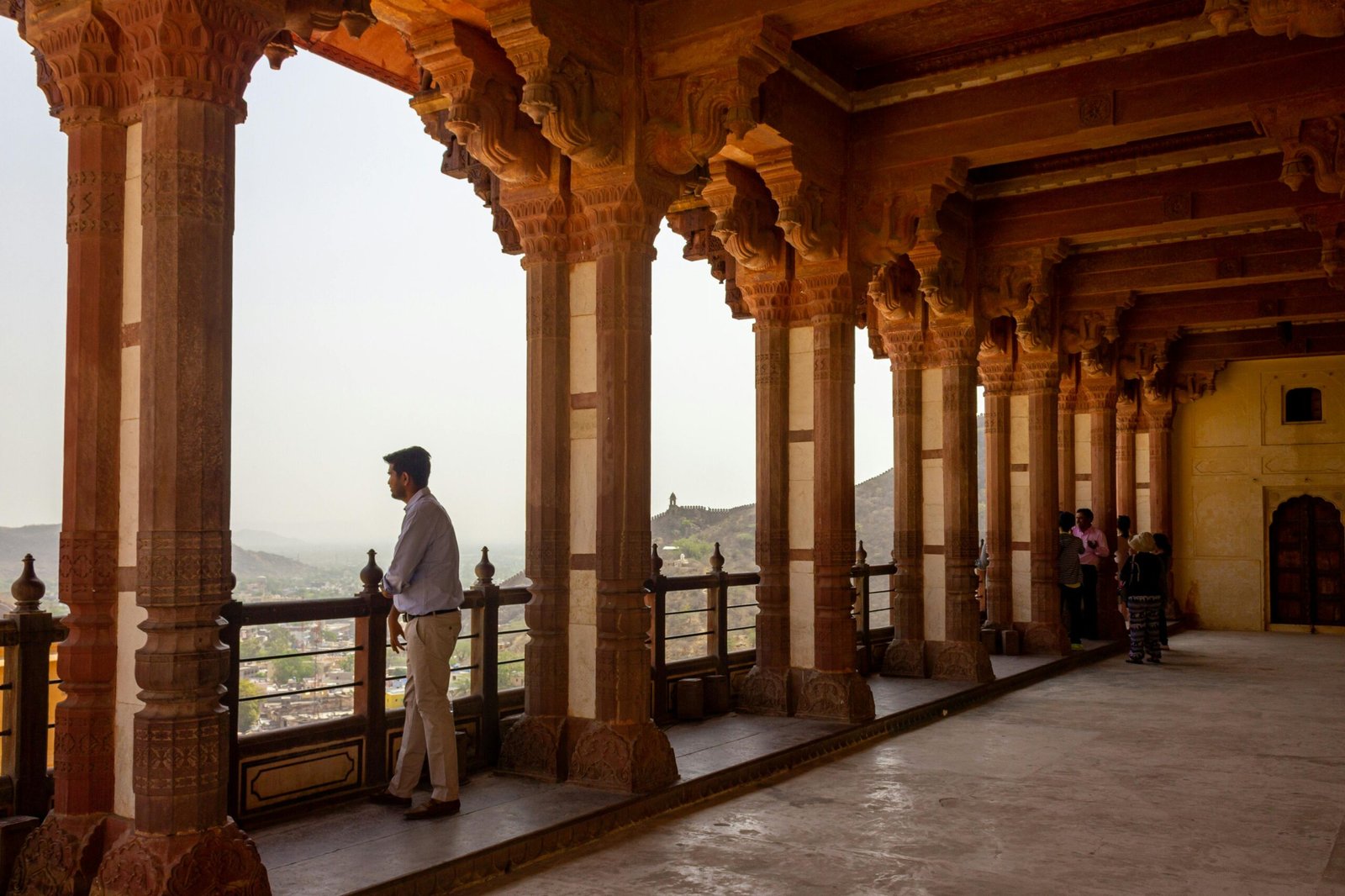
You see beautiful courtyards, the famous Sheesh Mahal, the Diwan-e-Aam, and the intricate Rajput and Mughal architecture up close. All of that is genuinely extraordinary. But the fort as a whole, the full scale of what was built here on this hill above Maota Lake, with Jaigarh Fort sitting on the ridge above it and the Aravalli Mountains framing everything behind, that picture only exists from outside.
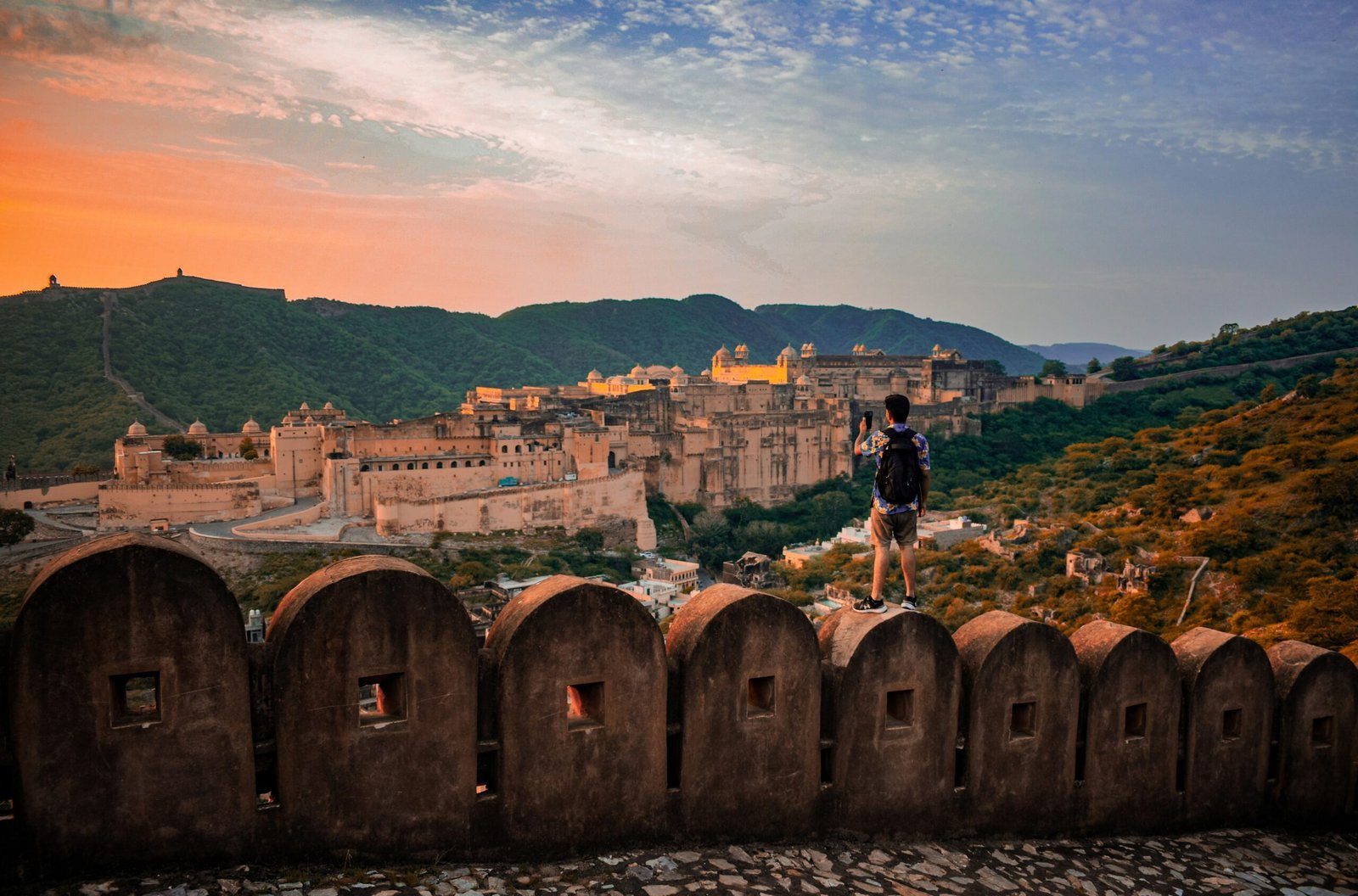
The watchtowers on the Amer Wall sit elevated and directly opposite the fort’s main face. From up there, the composition arranges itself as if someone planned it for a photograph. The fort fills the middle ground. Maota Lake sits in the foreground, reflecting the sky. The ridge above carries Jaigarh, connected to Amer by a subterranean passage that is visible in its logic only when you see both forts from this angle. It is, in a very literal sense, the whole story at once.
And then there is the sunrise. Because the Amer Wall sits directly opposite the fort’s main face, at sunrise, the light comes from behind the wall and travels straight onto the fort. The sandstone, that warm honey-coloured stone that makes Rajasthan’s forts look like they are permanently lit from within, catches the early light before anything else does. Maota Lake picks up the colours of the sky in the foreground. For about twenty minutes, before the sun climbs too high and the soft light hardens, the scene is something that no photograph fully captures.
It sounds like the kind of thing every travel writer says about every destination (“go at sunrise”). In this case, it is genuinely different, for one specific reason. Amer Fort opens at 8 AM. By 9:30 AM, the Jaipur sightseeing buses are pulling into the car park, and the Jaleb Chowk fills up fast. The fort you experience at 9:30 AM and the fort you experience at 8:00 AM are meaningfully different places.
But the Amer Wall, being outside the fort complex, has no such opening time. You can be on it before the city wakes up. You can watch the light change on the fort’s face from the watchtower while the auto-rickshaws below are still parked and the chai vendors are still lighting their stoves. And when the fort gates open, you walk in having already seen the one view that most visitors to Jaipur never get. The full picture, from the outside in.
The climb to the top of the wall takes about 30 minutes. The steps are steep and old, as steps from the 16th century tend to be. Wear shoes you can actually walk in. Bring water. Do not attempt it in the monsoon; the steps get slippery, and the watchtowers are exposed to lightning in ways that felt more acceptable when one’s job was defending a fort.
The town of Amer itself is older than Jaipur. It was the capital of the Kachwaha Rajput clan for nearly 700 years before Maharaja Sawai Jai Singh II decided to build a new planned city on the plains below in 1727. The fort, the wall, the Panna Meena ka Kund stepwell, just a ten-minute walk away, and the Shila Devi temple inside the fort complex. These are not additions to a Jaipur trip. They are a separate layer of history that most Rajasthan travel itineraries flatten into a single afternoon.
Most travellers give Amer Fort two or three hours, tick it off the list, and move on to Hawa Mahal or the City Palace, which is fine. Both of those are also worth your time. But if you are the kind of traveller who prefers understanding a place to simply photographing it, the Amer Wall is the single addition that changes everything. It takes one early alarm. It costs nothing to access. And it gives you the view that the fort’s own architects would have recognised as the correct one. The full scale of what they built, seen from the outside, in the morning light, before the rest of the world turns up.
Cross the road. Set the alarm. The fort will still be there at 8 AM. But that light on the sandstone at 6 AM waits for no one.
This is an excerpt from the travel notes of Lakshay Khurana, an avid traveller and contributor to Immerse India’s travel stories, who brings destinations to life through thoughtful narratives and personal journeys.
Enjoyed this story? Subscribe to Immerse India’s monthly newsletter, “The Peep”. Discover expert travel insights, offbeat destinations, community stories, and thoughtfully curated experiences designed to help you explore India deeper and more consciously.
Words & Insights : Lakshay Khurana
Additional Photography: Immerse India
Copyright belongs to the authors. All rights reserved.