
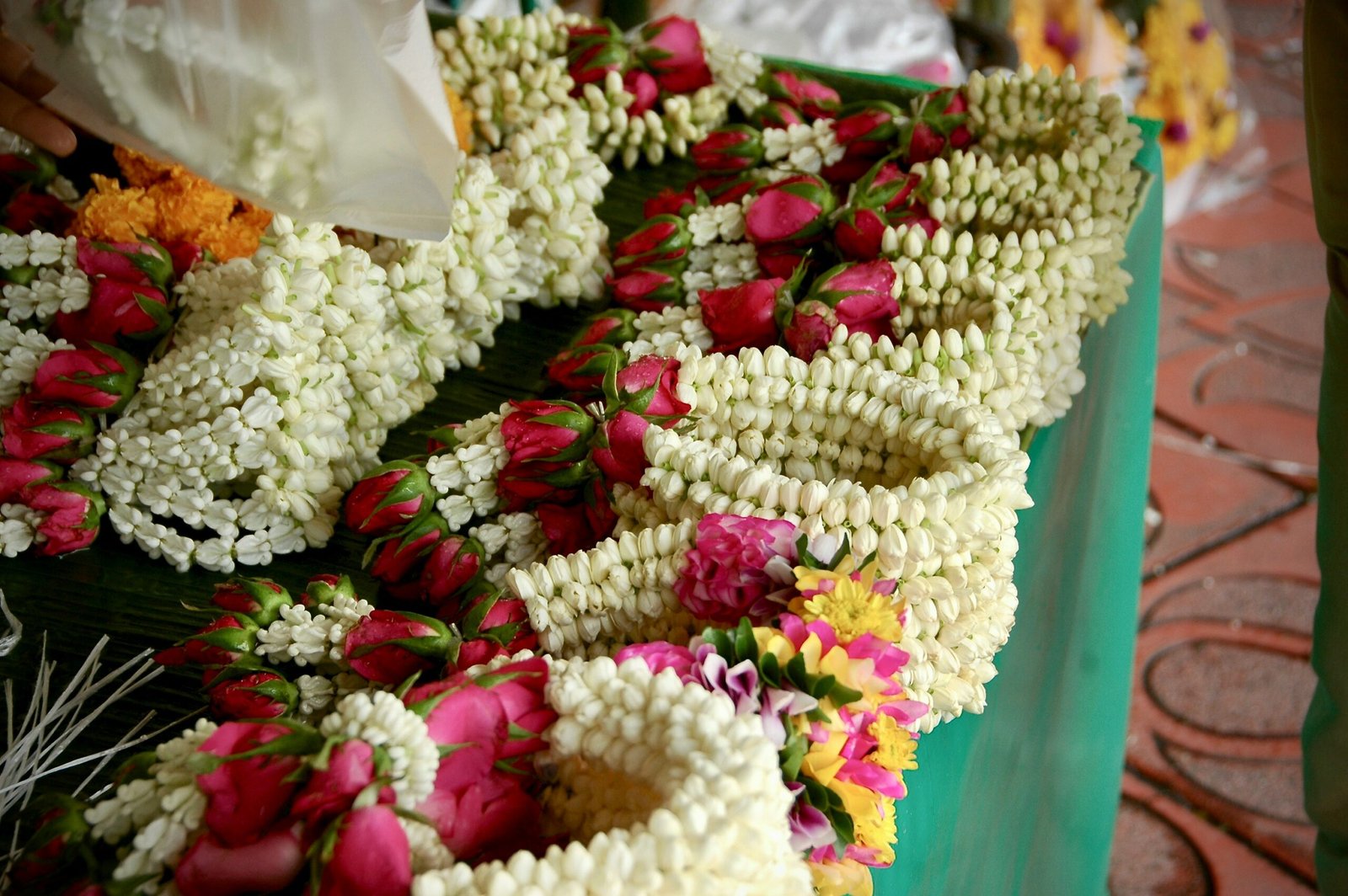
madurai jasmine flower-market

When I Fell in Love with Madurai Jasmine at the flower market

Words & Photography: Margaret Jones, Mohit Sharma // Tamilnadu Tourism

In South India, Madurai Jasmine, locally known as Madurai Malli, is more than a flower. Grown in Tamil Nadu, it is known for its thick petals, long-lasting fragrance, and cultural significance in temples and weddings. It is mainly harvested in Madurai and sold at the city’s famous flower markets. It is heritage woven in scent. Women wear it in their hair, not as an ornament, but as a quiet declaration of beauty, of tradition, of self. I first understood this while sitting with Meenakshi, my host, who worked with effortless rhythm on the verandah, stringing together strands of Madurai jasmine just as her mother and grandmother once did.

Thinking of this as both a guide and a story, I gently entwined through jasmine-scented mornings at the Madurai Flower Market, temple rituals, and the cultural world that makes Madurai jasmine iconic. Come, step into this journey where scent becomes story through fields, markets, and moments that become memory.

My Madurai jasmine trail began on a quiet summer evening in Tamil Nadu, in the courtyard of a small family home painted in shades of fading ochre. The sun was dipping low, spilling liquid gold over the tiled roof, when I caught the first whisper sweet, heady, almost intoxicating Jasmine.

Not the perfumed version that comes in bottles, but the real thing: freshly plucked, still warm from the sun, its petals cool against my palm. The air around me seemed to shift, as if time had slowed to make room for this scent.
“Each knot is a prayer,” she said, smiling without looking up. “You breathe in the flower, and it stays with you — not just here” — she touched her nose — “but here,” and tapped her chest.

Babbu’s Tips to Explore the Madurai Flower Market

The next morning, I met Babbu, my driver, who was taking me to the Madurai flower market. Courteous, attentive, and always smiling, he seemed to anticipate what I needed before I asked. Every day, without fail, he placed a fresh Madurai jasmine garland on the rear-view mirror. The moment I stepped into the car, the air filled with that familiar, velvety sweetness.
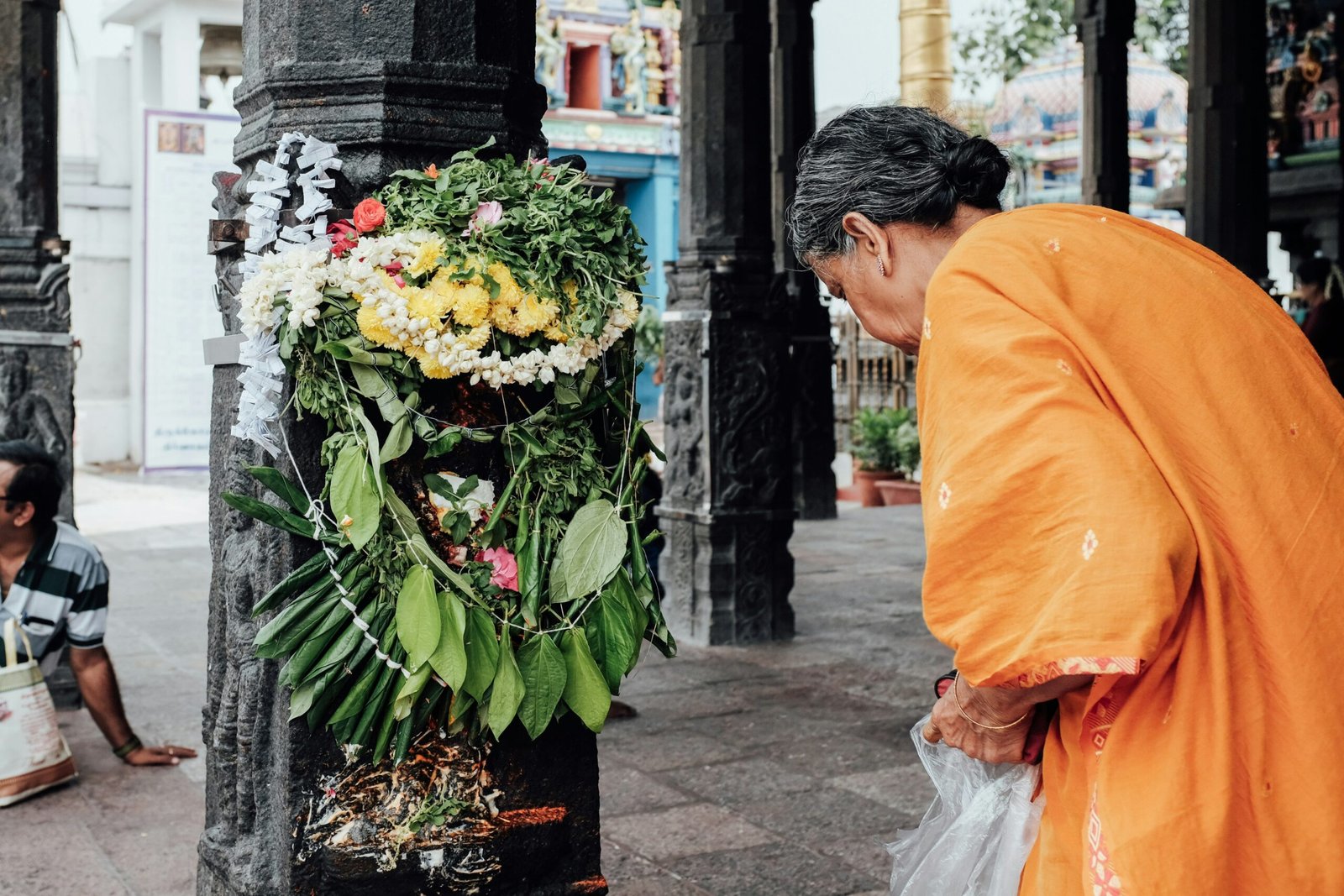
Madurai Jasmine Flower market

“In Tamil Nadu, jasmine, especially Madurai Malli, brings good fortune, purity, love, and devotion. We offer it to the gods, wear it at weddings, and keep it close to the heart,” Babbu said, while his voice carried the quiet pride of someone who lives the tradition rather than merely knows it.

In the Madurai flower market at dawn, crates of jasmine spilt onto the pavement, their pearly buds like beads waiting to be threaded. Women, sari pallus tucked neatly at their waists, worked with practised grace, their fingers moving as swiftly as their voices. The scent hung over everything, both delicate and insistent. The Madurai flower market, nestled between Madurai’s Central Market and the Mattuthavani Bus Stand, pulses with life from the earliest hours of the day.

In the evenings, the fragrance changed. Night-blooming jasmine drifted in with the cool air, softer and more elusive, as if it preferred to stay in the shadows. Sitting under a neem tree, I thought of the women I’d met: brides with thick coils of jasmine on their wedding day; widows wearing a single strand for the market; little girls learning their mothers’ knots with clumsy fingers.
Some scents are fleeting, gone in hours. But jasmine, I realised, was different. It stitched itself into memory — into the folds of a sari, the pages of a travel journal, the hum of an engine carrying you through Tamil Nadu with Babbu’s garland swaying gently at the front of the car.

Even now, far from that ochre courtyard, I can close my eyes and smell it: the heady sweetness of Madurai jasmine petals at dusk, the mingling of incense and temple bells, the laughter of women weaving garlands, and the quiet devotion of a driver who began every journey with a flower.

That’s when I understood — I hadn’t just fallen in love with the scent of Madurai jasmine. I had fallen in love with the life that bloomed around it.

Finding Madurai Jasmine at Meenakshi Temple

It was still dark when Madurai began to stir. Somewhere between the first temple bell and the gentle sweep of brooms across stone streets, a fragrance floated through the air—soft, sweet, and impossibly delicate. It came in waves, mingling with the scent of wet earth from the previous night’s rain. I followed it like a thread, winding my way past sleepy tea stalls and small shrines where flickering oil lamps kept the night at bay, until it led me toward the awakening bustle of the Madurai flower market.

The source was easy to find. Outside the Meenakshi Temple, you could see women sitting cross-legged, their hands moving with the rhythm of memory, stringing together buds of jasmine as if they were beading pearls. Each bud was still closed, wrapped in the mystery of the morning. “They’ll bloom fully later, and the scent will last all day.”, one woman smilingly said!
More than a flower, jasmine defines the spirit of Madurai. You find it woven into a bride’s hair, offered to the goddess, or tucked into the folds of a silk saree. At the Madurai flower market, the day begins before sunrise with baskets of fresh buds arriving, shopkeepers bargaining over garland lengths, and temple priests selecting the finest strands for daily rituals.

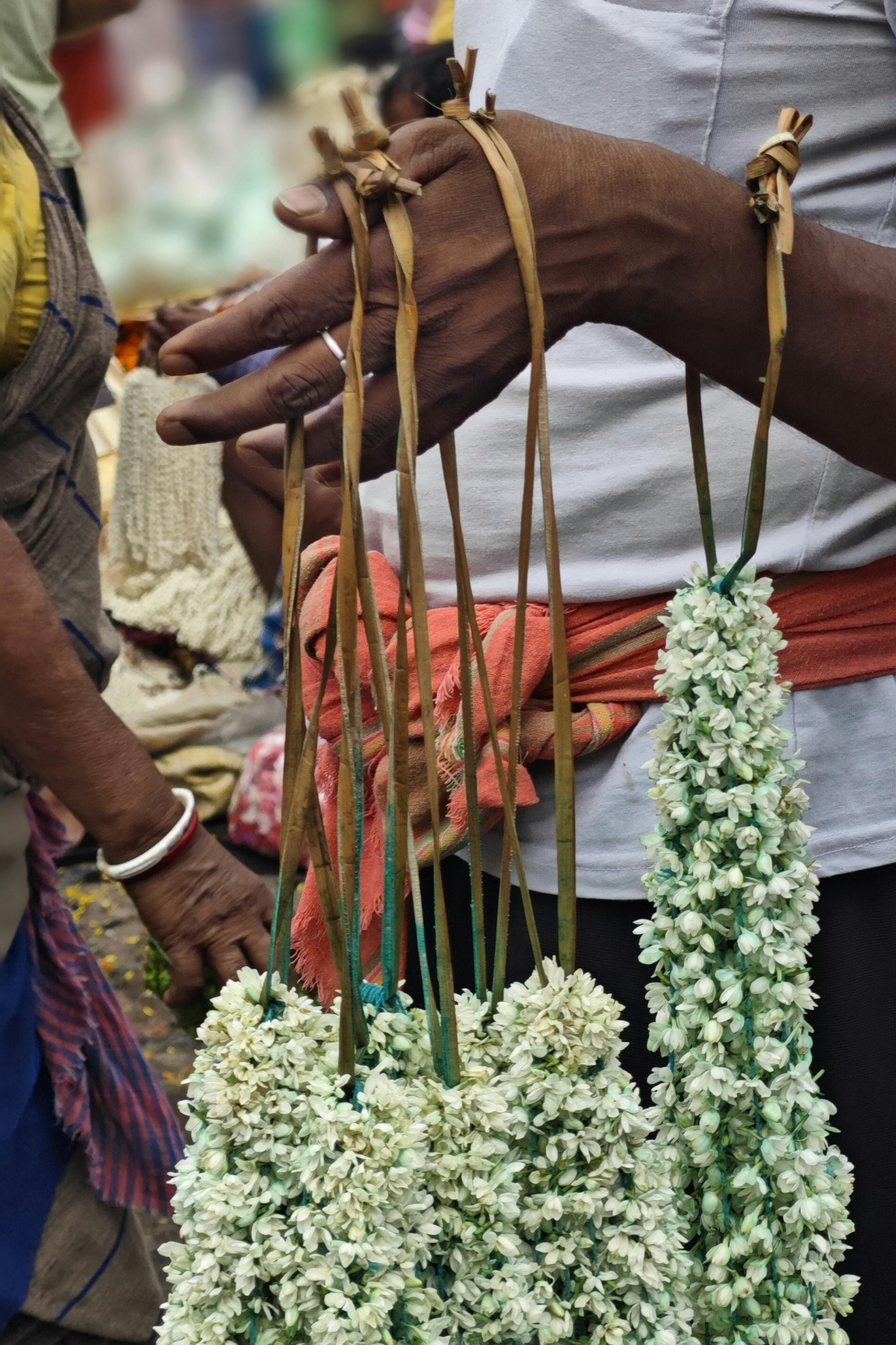
Vendor holding freshly strung Madurai jasmine garlands at the Madurai Flower Market
Hands exchanging strings of fresh jasmine at a bustling Madurai flower market — a fragrant tradition that carries the essence of Tamil Nadu’s daily life and celebrations.
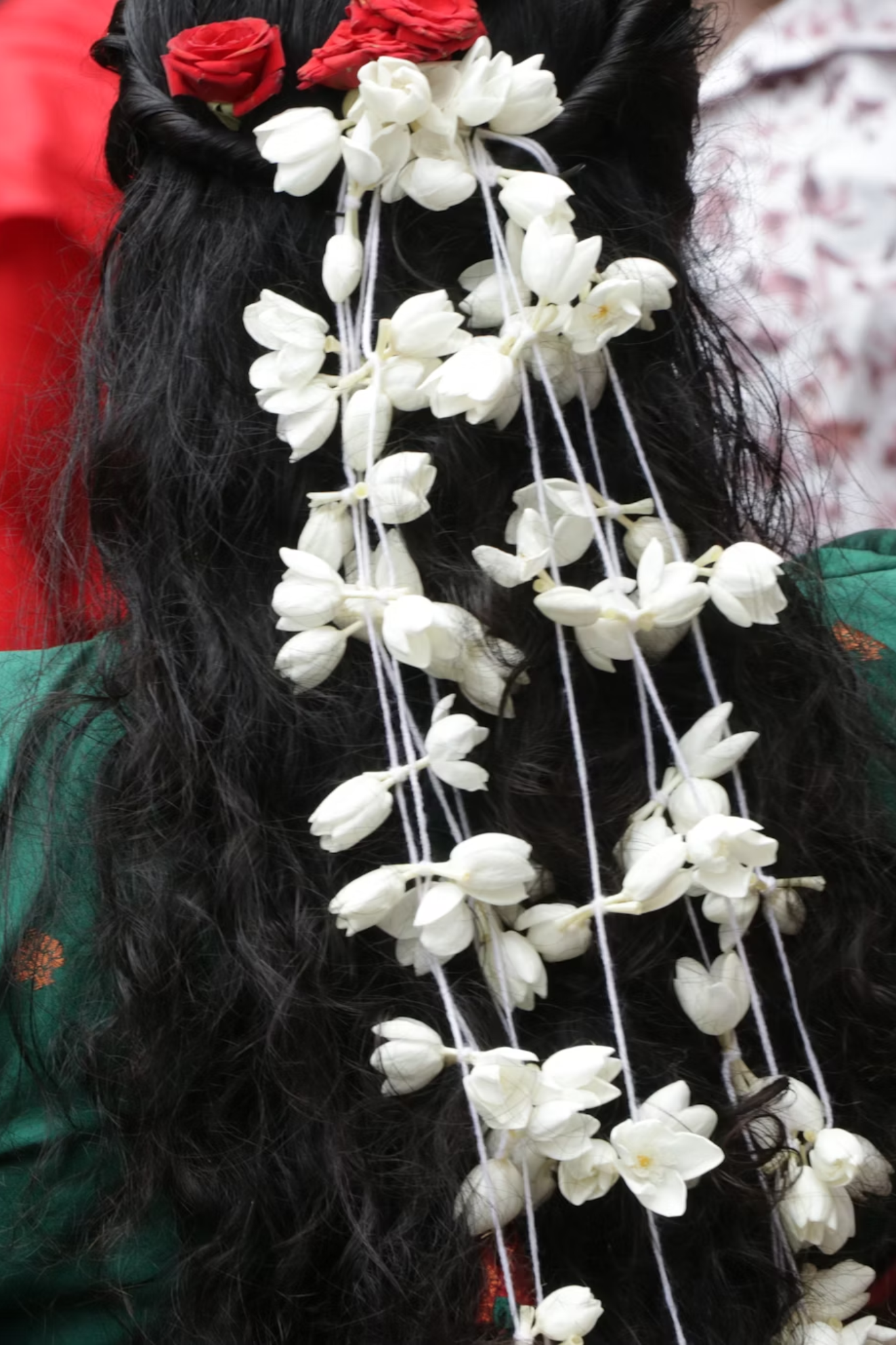
Madurai jasmine strands woven into a woman’s hair a South Indian tradition
A woman adorns her hair with a jasmine gajra (flower garland), a timeless symbol of beauty and grace in Tamil Nadu, where the fragrance of these delicate blossoms is as much about tradition as it is about charm.
“He gave away his chariot so a jasmine creeper could climb and touch the sun.”

Madurai Malli Geographical Indication (GI) tag

Madurai Malli is instantly recognisable because of its unique shape, soft texture, and intoxicating fragrance, which set it apart from every other jasmine variety. In 2013, Madurai Jasmine was awarded a Geographical Indication (GI) tag, thanks to the efforts of local farmers and activists. This recognition legally protects the variety and affirms its exceptional quality and cultural significance.

It struck me then. Madurai has always understood the significance of beauty, of giving space for something delicate to flourish. Planning a trip to Madurai means letting the senses lead the way. A day in Madurai begins with wanderings through the Madurai flower market and visits to its magnificent temples, afternoons exploring silk weavers’ colonies or savouring strong filter coffee in charming old cafés. Reserve the evenings for the aarti ceremony at Meenakshi Temple and watching the city bathe in golden light from the temple towers. And through it all, the fragrance of Madurai jasmine lingers, following you through every street, every conversation, every moment.

Madurai’s love affair with jasmine runs deep, tracing back to 300 BC, and is celebrated in Sangam poetry and temple art of ancient Tamil scholars. From dawn, women string delicate buds into garlands destined for temples, brides, and festivals. By afternoon, the same flowers may fly out to Mumbai, Delhi, Dubai, Paris, and even the US, or be distilled into luxury perfumes by houses like Dior, Tom Ford, and Guerlain, and be worn by those who indulge in the world’s finest scents. Madurai is probably the place where the world’s best jasmine, the Madurai malli, grows. Thanks to this quiet, backbreaking labour, a humble flower travels the globe, carrying the fragrance of Tamil culture with it.

For travellers with Immerse India, we weave this experience into a day that begins with dawn prayers at the Meenakshi Temple, moves through the bustling flower markets, and ends with a private dinner under a canopy of jasmine strings, the air heavy with their perfume. Somewhere between the first strand and the last garland, you too might fall in love with Madurai.

If you are planning your Madurai jasmine experience, always;

This is an excerpt from the personal journal of Margaret Jones’ trip to Tamil Nadu in 2024, graciously shared for our Immersive Experiences Series.

Enjoyed this story of Madurai Jasmine? Subscribe to Immerse India’s monthly newsletter, “The Peep”. Discover expert travel insights, offbeat destinations, community stories, and thoughtfully curated experiences which are designed to help you travel deeper and more consciously.

Words & Photography: Margaret Jones

Additional Photography: Mohit Sharma

Copyright belongs to the authors. All rights reserved.